How to Write Constructive Feedback on AI Art
Feedback on AI art lands differently to feedback on a pencil sketch or a photograph. The person receiving your notes may have spent two minutes on a prompt or two weeks refining an image, and the argument around the tools themselves is loud enough that a remark about colour balance can be heard as a verdict on the whole medium. The good news is that the principles of useful critique have not changed. Describe honestly, keep the tool separate from the picture, and make suggestions the artist can actually act on.
Why feedback on AI art feels harder than it should
Online discussions about AI art tend to polarise fast. A thread on Artist Forum put the case against it bluntly, describing AI art as soulless image generation that hinders real artists and steals the work of actual artists. A writer on The Shortform took the opposite position, arguing that the idea AI art steals from artists is a misconception and that predictions of artists being unable to make a living are unlikely to come true. Both views are widely held, and both can sit in the same comment section.
That noise creates a practical problem. When you look at an AI-assisted piece, you cannot tell how much of the finished image came from the prompt, how much came from hours of reworking in an editor, and how much came from decisions about which of forty variations to keep. The artist may not know how to explain it either. One artist noted that giving a genuine critique, complete with requests for subtle changes, can leave the person who asked for it floundering. Before you write a page of notes, it helps to know whether they want a full workshop critique or a quick second opinion.
Separate the tool from the work
A useful line from a forum discussion compares harsh reactions to the method with judging a painting by what the painter was wearing while they made it. The same comment makes a simple point: AI is a tool, and art tools develop over time but remain tools. A critique that opens with a complaint about the software is not really a critique of the image. It is a statement about the medium, and it usually closes the conversation rather than opening it.
The Center for Art Law published an article in April 2024 describing AI as a creative collaborator, and it quotes an artist explaining how she integrated artificial intelligence into her digital process. The piece also makes a distinction worth borrowing: however much of the mechanical work is automated, the human artist’s vision, aesthetic sensibility and emotional depth remain part of what shapes the result. Aim your comments at those things. Composition, light, colour relationships, clarity of subject, edge control and whether the image holds together at a distance are all fair game, regardless of how the file was produced.
Understand the authorship question before you comment
A piece published by The International in February 2023 argued that one of the first problems with quick, mass-produced AI art is authorship and ownership. Artists themselves are split on the wider subject. As one discussion on Thinkers’ Train noted, some see AI as an opportunity to create work that could not have been made without it, while others see a threat to what they value about making art by hand.
You do not have to resolve any of that to give useful notes. If an artist has asked you to look at an image, they have asked for a craft conversation, not a debate about training data or copyright. Leave the structural questions for a separate discussion, and if you genuinely want to raise them, do it once, plainly, and let the artist decide whether they want that conversation at all. Mixing the two produces the kind of comment nobody can respond to well.
A practical structure for constructive feedback on AI art
Most criticism falls apart because it jumps straight to judgement. A simple four-step sequence keeps you honest and gives the artist something to work with.
Describe what you see before you judge it
Start with plain description. Note the subject, the palette, the light source, the way the eye moves through the frame. This does two things. It proves you actually looked, and it gives the artist a chance to correct you if you have misread the image. If you thought the figure was facing away and they intended it to face forward, that misunderstanding is more useful to them than any opinion about the brushwork.
Lead with what already works
Name the strongest element and say why it functions. Perhaps the lighting is convincing, or the silhouettes read clearly at thumbnail size, or the colour scheme holds together in a way that feels deliberate. This is not flattery. Knowing which parts are carrying the image helps the artist protect them while fixing everything else, and it prevents your notes from reading as a blanket dismissal.
Ask about intent and process
Questions are often more valuable than statements. Ask what mood they were chasing, whether the softness in the background was a choice or a compromise, which parts they reworked by hand and which they left untouched. This is especially useful with AI-assisted work, where the artist may have wrestled with an output they could not fully control. Once you know the intention, your suggestions can aim at the gap between what they wanted and what the file currently does.
Offer changes you would actually make
Vague notes such as “make it more dynamic” give the artist nowhere to go. Specific ones do. Suggest raising the contrast on the foreground figure, cooling the shadows, cropping tighter on the left, or reducing the number of competing details in the background. Whether they take the advice matters less than the fact that it is concrete enough to accept or reject on its merits.
Phrases that help, and phrases that hurt
Small wording changes make a large difference to how feedback is received. The table below pairs common reactions with versions that keep the conversation moving.
- Instead of “this looks AI-generated”, try “the texture in the background feels softer than the figure, which makes the figure stand out”.
- Instead of “this is soulless”, try “I cannot tell what the image is about yet, and I would like to know what you intended”.
- Instead of “anyone could have made this”, try “the composition reads a little familiarly, so the personal detail may need to work harder”.
- Instead of “the hands are wrong”, try “the hand on the left has six fingers, which pulls attention away from the face”.
- Instead of “start again”, try “the pose is strong, but the background competes with it”.
How to respond when you dislike AI art
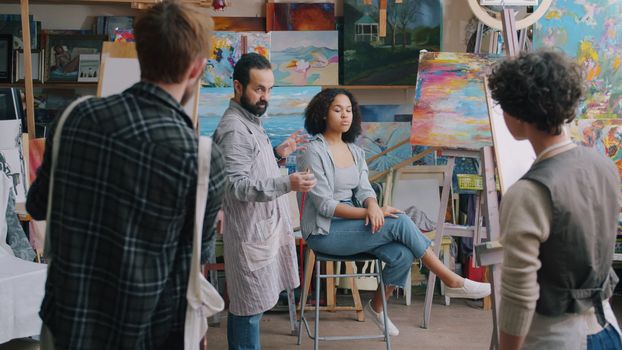
You are allowed to hold that view. You are also allowed to decline a critique request without turning it into an argument. A short, honest reply that says AI-assisted work is not something you feel equipped to comment on is fair and takes ten seconds. If you want to engage anyway, restrict yourself to the elements you can honestly assess, such as composition, legibility and colour, and be clear that you are commenting on those rather than on the method. What you should avoid is using a critique request as an opening to relitigate the entire debate.
How to get better notes as the artist
If you are the one asking, you can improve the feedback you receive before anyone writes a word. Say what stage the piece is at, whether you still intend to rework it, and which parts you are unsure about. If there are areas you do not want touched, mention them. Ask for the kind of response you want, whether that is a gut reaction to the overall image or detailed notes on technique. Artists who ask narrow questions tend to get useful answers, and the ones who ask for a general opinion tend to get a general opinion back.
Critique etiquette in shared spaces
Public threads and group posts are not private conversations, and a comment written for one artist will be read by everyone else in the room. Keep notes about the image rather than the person, avoid piling on when someone else has already made your point, and do not use another artist’s thread to make a general statement about AI. If you have something genuinely harsh to say, it is usually better sent privately or softened until it is specific enough to be actionable. The aim is a working studio conversation, not a verdict.
Frequently Asked Questions
Is it rude to say an AI-generated image looks generic?
It depends on how you say it and whether you can explain it. A bare statement about genericness tells the artist nothing they can use. A useful version points to the specific element that feels familiar, such as a stock lighting setup or a common composition, and suggests one change that would give the image a more distinctive point of view.
Should I ask an AI artist how many prompts they used?
You can ask, but treat it as curiosity rather than a measure of effort or value. The number of prompts says very little about the finished result, since selecting, cropping and reworking a single output can take far longer than generating dozens of variations. If the artist does not want to discuss process, let the question drop and return to the image itself.
How do I critique AI art if I do not use AI tools myself?
You critique it the same way you would any other image, by describing what you see and explaining how it affects you. You do not need to know the software to notice that a background is muddy or a composition is crowded. Say plainly which parts of the process you do not understand, and stick to observations you can defend by pointing at the picture.
What if the artist argues that any criticism is anti-AI?
Some artists are defensive because a great deal of online commentary genuinely is hostile. Restate that your notes are about the image rather than the medium, then give one specific example, such as the light direction contradicting the shadows. If the conversation still cannot separate the two, it is reasonable to step back and leave the artist to their own judgement.