AI's Brushstroke on Canvas
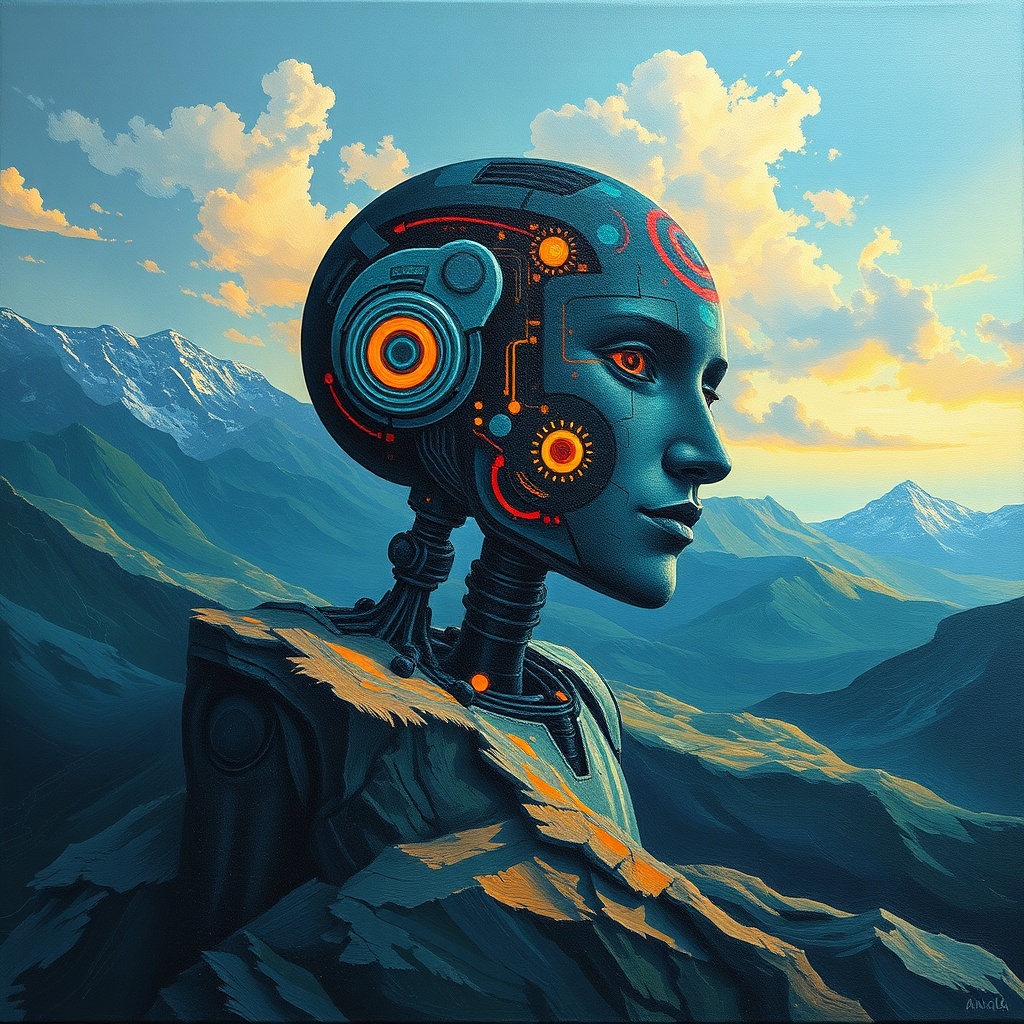
Defining the Central Concept
In an era where technology permeates nearly every aspect of life, the intersection of artificial intelligence (AI) and artistry is a particularly intriguing phenomenon. This convergence involves harnessing AI’s capabilities to generate, enhance, and sometimes entirely create new art forms. At its core, the application of AI in artistry seeks to expand the canvas of creativity through algorithms and machine learning, offering artists unprecedented tools for expression. This synthesis allows for the creation of digital art that challenges traditional conceptions of creativity, redefining what can be achieved on a canvas transformed by technology.
Evolution of the Topic Over Time
The integration of AI into the arts is not a recent development but rather a progression that has accelerated over the last few decades. Initially, digital art was primarily the domain of graphic design, relying heavily on human input. However, as machine learning and AI technologies advanced, artists began to see the potential for automated systems to aid in artistic creation. From simple algorithmic patterns in the 1960s to sophisticated neural networks capable of mimicking and expanding human creativity today, AI’s role in art has continuously evolved, opening doors to innovative methods of artistic expression.
Statistical Data and Findings
Artificial intelligence has begun to play a notable role in the art market, which generates billions in revenue annually. According to recent studies, AI-generated artworks have fetched significant sums at auction, illustrating the growing acceptance and interest in digital creativity. Moreover, platforms employing AI in art creation report increased engagement, suggesting that audiences are intrigued by this new form of artistry. While exact figures can vary, what remains clear is the rising prominence of AI-generated art in both commercial and creative spaces.
Environmental Impact and Concerns
The environmental implications of utilizing AI in art are multifaceted. On the one hand, AI’s data-driven processes demand significant computing power, which can contribute to increased energy consumption. This raises concerns about sustainability in digital art production. On the other hand, digital artworks do not require physical materials or transport, potentially reducing environmental footprints compared to traditional art forms. Balancing these aspects remains a critical consideration as AI continues to evolve as an artistic tool.
Innovative Solutions and Strategies
To mitigate environmental concerns, efforts are being made to improve the efficiency of AI algorithms and the energy usage of data centres. Innovations such as energy-efficient GPUs and the use of renewable energy sources for powering data operations are promising strategies. Additionally, artists and developers are exploring new ways to utilise AI in a sustainable manner, developing algorithms that require less computational power without compromising on creativity or complexity.
Stakeholder Roles and Responsibilities
Artists, technologists, and policymakers all play crucial roles in the ethical and sustainable integration of AI in art. Artists are urged to continue pushing the boundaries of digital creativity while remaining conscientious about the environmental impact. Technologists and developers have the responsibility to innovate responsibly, designing smarter AI tools that enhance creativity without excessive resource use. Policymakers must ensure regulations guide the ethical use of AI technology in art, safeguarding intellectual property and ensuring equitable access to these tools.
Global Perspectives and Differences
AI’s influence on art differs around the world, reflecting local cultural and technological environments. In tech-forward regions like North America and Europe, AI’s integration is more pronounced, often seen as a natural extension of digitalization in the arts. By contrast, in regions with less technological infrastructure, traditional techniques may still dominate, with AI’s artistic roles more exploratory than established. Cultural attitudes towards AI-generated art also vary, with some societies embracing the novelty while others remain sceptical, questioning its authenticity and value.
Policy and Advocacy Efforts
Policymakers are beginning to address the unique challenges posed by AI in art through new legal frameworks. These efforts aim to protect the rights of human creators while fostering innovation. Advocacy groups stress the importance of transparency and fairness in AI art development. Policies that support educational initiatives around digital art and technology are instrumental in ensuring that future generations understand and can harness AI creatively and ethically.
Recent Breakthroughs and Discoveries
Recent advancements in AI have produced stunning and emotive pieces that rival those created by human hands. For instance, the use of generative adversarial networks (GANs) has enabled the creation of images with remarkable realism and creativity. Furthermore, AI’s ability to analyse vast datasets allows it to draw inspiration from countless art styles, blending them into novel forms that challenge and inspire us. These breakthroughs continue to reshape the dialogue around authenticity, originality, and expression in the realm of art.
Reflective Summary and Recommendations
GeDesPI AI Arts