Celebrity AI Art Projects and What Artists Can Learn
Celebrity faces turn up constantly in AI image galleries, and the volume is easy to underestimate. Lumenor AI hosts a gallery page titled “celebrities”, described as AI-generated images related to celebrities, and it displays 357 results. A separate Lumenor AI search for “celebrity as art” reports 40 image results. Those numbers describe output, not authorship, and that distinction matters for anyone trying to learn from the trend.
The research behind this article found no verified named celebrity AI art project. There are no confirmed dates, partners, artworks, exhibitions or official statements in the material reviewed. What can be examined honestly is the visible activity: large collections of AI-generated images relating to celebrities, a wave of viral AI art trends in spring 2025, and a set of techniques that explain how this work gets made. Each of those offers something useful to a working artist.
What the Visible Evidence Actually Shows
Two things are documented clearly enough to build on. First, celebrity-related AI imagery exists at scale in public galleries. Second, AI art trends move through social media in bursts, and those bursts attract commentary from artists. Neither piece of evidence proves that a celebrity commissioned, endorsed or participated in an AI art project, and readers should not assume otherwise.
It is also not stated anywhere in the available material whether the celebrity-related images on such galleries are licensed, authorised by the people depicted, or officially associated with them. If you plan to use similar imagery commercially, check the platform’s terms and take proper advice rather than inferring permission from the fact that an image is publicly visible.
A Gallery Collection and a Viral Trend Are Not the Same Thing
These two phenomena are often discussed as if they were one story. They are not, and separating them helps you decide which one is worth learning from.
| Feature | Gallery collection of celebrity imagery | Viral AI art trend (April 2025) |
|---|---|---|
| What it is | A hosted gallery described as AI-generated images related to celebrities | An explosion of AI-generated images shared in recent weeks, per a Yahoo News report dated 18 April 2025 |
| Scale evidence | 357 results on the celebrities gallery page, and 40 results for a related search | Not quantified in the available reporting |
| Typical examples | AI-generated images relating to celebrities | Studio Ghibli-inspired illustrations and doll “starter packs” |
| Why it matters to artists | Shows sustained demand for recognisable subjects | Shows how quickly a style or format can spread, and how quickly debate follows |
The Yahoo News report notes that the wave of AI-generated images sparked fresh debate among artists. That reaction is worth studying in its own right, because it shows how audiences and peers respond when a recognisable style is reproduced at speed.
Lesson One: Prompt Engineering Is a Disciplined Skill
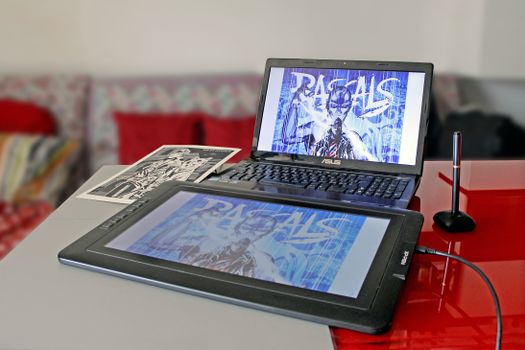
Prompt engineering is the practice of crafting specific inputs to guide AI tools towards the output you want. It sounds trivial until you try to reproduce a result. A vague prompt returns a vague image, and a precise one gets you closer to a usable starting point. Keep a written record of the prompts that worked and the ones that failed, with short notes on why. That record becomes a genuine craft document, and it is the closest thing AI work has to a sketchbook.
Lesson Two: Style Transfer Rewards Close Looking
Style transfer applies the style of one image to another. Used carelessly, it produces pastiche. Used deliberately, it forces you to name what actually makes a style recognisable: the palette, the line weight, the way shapes are simplified, the treatment of light. The viral Studio Ghibli-inspired illustrations mentioned in the April 2025 reporting are a useful case, because so much of that look depends on specific choices rather than a single filter. Analyse those choices before you imitate them.
Lesson Three: Speed Is Not the Same as Finished Work
AI can produce high-quality visuals in minutes, while traditional art creation often involves hours of sketching, painting and refining. That gap is real, and it is also misleading. The minutes refer to generation, not to the whole job. Selection, correction, cropping, colour adjustment and the decision about what the piece is for all take time. Treat generation as the fast part and edit as the part that earns the work its quality.
Lesson Four: Understand the Machinery Behind the Output
Generative Adversarial Networks create realistic images by pitting two neural networks against each other. Models are trained on thousands or even millions of images to learn patterns, textures and artistic styles. You do not need to build a model to benefit from understanding this. Knowing that your prompt is steering a learned statistical pattern rather than drawing from imagination explains why certain subjects, poses and lighting setups appear again and again, and why unusual requests need more coaxing.
Lesson Five: Rights and Reputation Deserve the Same Attention as Aesthetics
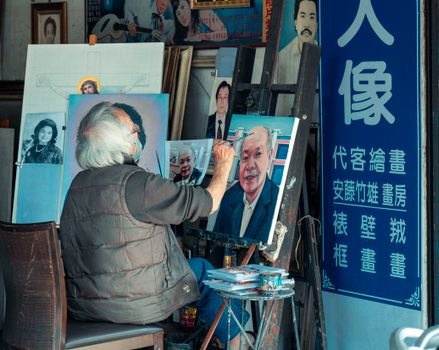
A recognisable face carries commercial and personal weight that a landscape does not. Before publishing or selling celebrity-themed AI work, establish who owns what, what the platform permits, and whether the person depicted has any say. The available research does not settle those questions for any specific project, so verify with the relevant platform and take advice for commercial use. A short delay before publishing is cheaper than a dispute afterwards.
Lesson Six: Build a Body of Work, Not Just a Feed
AI art for personal projects can serve hobbies, social media or personal branding. Those are three different goals with three different standards. A post that performs well is not the same as a portfolio piece, and a portfolio piece is not automatically saleable. Decide which one you are making before you generate anything, then keep the work that supports that aim and let the rest go. A coherent set of twenty images will do more for your reputation than two hundred scattered experiments.

A Workflow You Can Adapt
- Define the purpose first: hobby, social post, portfolio or sale.
- Write the prompt as a description of intent, not a list of keywords.
- Generate a small batch and stop. More variations rarely improve judgement.
- Select one image and name the weakest part of it in a sentence.
- Re-prompt or edit specifically to fix that weakness.
- Record the prompt, the settings and your reasoning for the finished piece.
- Check rights and platform terms before any public or commercial use.
- Publish only if the result would still represent you in a year.
Questions Worth Asking Before You Publish
- Can I explain what this image is, without implying an endorsement that does not exist?
- Is the style borrowed so closely that it reads as a copy rather than a response?
- Does the platform I am using permit this kind of image?
- Have I kept a record of the prompt and the edits?
- Would I be comfortable if the person depicted saw it and asked how it was made?
Celebrity AI art projects, as far as the record shows, are less a set of named collaborations and more a broad pattern of public output. That makes them useful as a mirror rather than a template. Watch what gets generated at scale, notice which styles travel fastest, and then apply the parts that genuinely strengthen your own practice. The artists who benefit most from this period are likely to be the ones who treat prompting as a craft, editing as the real work, and rights as a necessary step rather than an afterthought.
Frequently Asked Questions
What are celebrity AI art projects?
The term is used loosely. The clearest documented example is a public gallery described as AI-generated images related to celebrities, showing 357 results. There is no verified evidence in the available material of named celebrities launching, endorsing or collaborating on such projects, so treat the phrase as a description of output rather than confirmed involvement.
Are celebrity AI images officially approved by the people shown?
The available research does not say. It does not state whether celebrity-related galleries are licensed, authorised or officially associated with the people depicted. Public visibility is not the same as permission. If you intend to use similar images, check the platform’s terms and seek proper advice before any commercial use.
Can I sell AI-generated art featuring a celebrity?
The research reviewed here does not establish the position for any specific case, so no general answer can be given. Rights, platform terms and the interests of the person depicted all need separate checks. Take professional advice suited to your own situation before selling work of this kind.
How much faster is AI art than traditional art?
Generation is much faster. AI can produce high-quality visuals in minutes, whereas traditional art creation often involves hours of sketching, painting and refining. The comparison is not like for like, because selection, correction and finishing still take time, and those stages are where most of the quality is decided.
Which AI art techniques should a beginner learn first?
Start with prompt engineering, which means crafting specific inputs to guide a tool towards the result you want. Then study style transfer, which applies the style of one image to another. Learning how Generative Adversarial Networks work, with two neural networks pitted against each other, gives useful context for why outputs behave as they do.