Abstract AI Art Techniques for Expressive Creations
Abstract art has always rewarded viewers willing to feel first and analyse later. When artificial intelligence enters the frame, the creative process changes shape again. Machine learning can produce colour fields, gestural marks and strange geometries that no human hand would naturally compose. For an artist, the appeal lies in learning how to steer that output without smothering it.
The abstract AI art techniques covered here are grounded in real workflows used by creators. They bring together source images, machine learning models, considered prompts and a readiness to be surprised by the system. Some approaches suit pure digital abstraction, while others borrow from painting, photography and the history of modern art.
Understanding AI as a Creative Tool
A useful starting point is to stop thinking of AI as a replacement for artistic skill. One way to understand the relationship comes from a practicing artist who puts it simply: a tool does not have to be a hammer or an axe; sources are tools too, like a book. A reference photograph, a found texture or a collection of older paintings can all function as creative instruments.
That idea matters because it changes how responsibility is shared. The artist selects the input, shapes the prompt, chooses the model and decides which results deserve to survive. The machine handles the rendering. When the two work well together, the output feels neither fully hand-made nor fully automatic.
The Essential Ingredients of AI Abstraction
A documented attempt to build a system for machine-made abstract paintings, the MachineRay project, found that three things are needed to create abstract paintings: source images, a machine learning model, and a considerable amount of processing power. That simple formula explains the structure of many tools available today.
The source image can be an original photograph or a piece of artwork the artist has permission to use. The model does the interpretation. The processing power turns that interpretation into a visible image. When someone sends a photo to an AI system, something interesting happens: as one creator describes it, the model acts like a manager that decides which painter should do the painting. The same source can therefore be rendered as a loose watercolour, a dense oil painting or a sharp digital print, depending on the system’s choices.
What makes this process creative is the quality of the starting material. Personal photographs, architectural studies and even earlier abstract pieces can all become the starting point for something new. Experimenting with different sources is one of the most direct abstract AI art techniques available to a newcomer.
Writing Prompts That Move Beyond Description
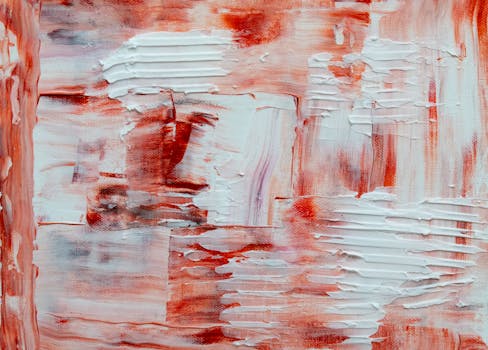
Many generators accept a plain instruction such as “generate an abstract painting”. The real skill is in making that instruction work harder. Some platforms offer more than a hundred built-in styles, so the same sentence can be rendered in completely different visual languages. Choosing a style is a creative decision in itself.
A text prompt for abstraction tends to perform best when it describes visual qualities rather than objects. Words that evoke movement, weight, layering and contrast give the model more room to interpret. Colour relationships, the direction of marks and the feeling of light passing through pigment are the kinds of ideas that translate well into machine-made abstraction.
If the results are too predictable, the prompt can be made more unusual or the style can be changed. Iteration matters in this medium. The first output is rarely the final artwork; it usually functions as a sketch to be refined over several passes.
Turning a Photograph into an Abstract Study
Not every abstract AI piece needs to begin as text. A range of accessible tools can turn a photograph into abstract art in seconds. These systems use an AI abstract filter to add depth, creativity and artistic style to an existing image. The workflow is quick, which makes it ideal for building a series of variations around one subject.
One approach favoured by artists working in communities such as CivitAI and Weights is to send a photo into the system and let the model decide which painterly treatment fits. This technique suits artists who think in terms of transformation rather than pure invention. A familiar building, a portrait or a landscape becomes the hidden structure beneath layers of algorithmic paint.
For artists working this way, curation is essential. From a set of generated variations, certain images deserve further attention. Those can be upscaled, recoloured or combined with other sources in a second pass.
Building on Cubism, Futurism and Suprematism
AI does not create in a vacuum. It is building on earlier movements such as Cubism, Futurism and Suprematism, which broke down objects, celebrated motion and reduced painting to pure feeling. Artists who know this history have an advantage because they can bring that vocabulary to their prompts.
That connection to history is visible at scale in institutional projects. In November 2022, the installation Unsupervised by Refik Anadol was exhibited in the lobby of the Museum of Modern Art in New York. Machine learning interpreted the museum’s archive of modern art, producing a flowing display of abstract forms. The work did not copy any single painting; instead it responded to patterns across decades of artistic production.
A similar layering of machine perception and abstraction appeared in Synthetic Abstractions from 2018. That project generated images that human viewers perceived as abstract but which triggered recognition in image recognition systems. The audience saw colour and form; the machine saw something it could categorise. Playing with that gap between human perception and machine recognition can produce hauntingly expressive effects.
Automation and the Artist’s Unconscious
Abstract expressionism and surrealism placed a high value on automatism. The surrealists tried to bypass rational control, and later painters sought to evoke the unconscious of the individual artist. Gesture, accident and impulse were treated as routes to authentic expression.
Algorithmic art introduces a different kind of automatism. The machine has no personal unconscious, yet it can imitate the outward signs of spontaneity: dripping paint, scraped surfaces, blurred edges and broken grids. Viewers may respond emotionally even when no human gesture is present.
This shift changes what the artist does. Instead of trying to free an inner voice through automatic mark-making, the AI artist orchestrates conditions under which convincing accidents can occur. The expressive result may look similar to earlier abstract painting, but the imagination behind it operates at the level of selection, framing and intention.
A Flexible Workflow for Expressive Outputs
For creators who want a repeatable process, the following sequence brings the main techniques together:
- Start with a source image that holds some formal interest, or write a prompt focused on colour, texture and movement.
- Choose a style that exaggerates the qualities you want; platforms such as DeepAI and OpenArt allow experimentation without a steep learning curve.
- Generate a first batch and treat the outputs as sketches rather than finished pieces.
- Use a photo-to-abstract filter to test how the same image changes across different painterly approaches.
- Return to art history for cues; the geometry of Cubism, the energy of Futurism and the reduction of Suprematism can all be reflected in the prompt.
- Refine promising images at higher resolution. DeepAI Pro members have access to Genius modes with more detail and stronger adherence to instructions, plus Super Genius mode for 2K and 4K output.
- Curate honestly. A small set of strong images matters more than a large set of average ones.
Polishing the Final Image
Expression does not end when the generator stops. Decisions about cropping, framing, print size and surface texture change how an algorithmic image is read. An abstract piece made for a phone screen can feel very different when it is printed at exhibition scale, where fine variations in the machine’s rendering become visible.
Artists who intend to sell or exhibit their AI work should therefore consider resolution part of their technique. Generating at standard size, then testing which details survive a high-resolution pass, helps reveal whether an image has lasting strength or only works as a small thumbnail. That final stage of judgement is where many abstract AI art techniques come together.
Frequently Asked Questions
What do I need to start making abstract AI art?
The practical starting point is a source image or a written prompt, a machine learning model and enough processing power to generate a result. Many free generators simplify this further. If you prefer to work from photographs, tools such as LightX take an existing image and apply an abstract filter. If you prefer text prompts, platforms such as DeepAI and OpenArt let you describe the abstraction and choose a style.
Which tools work well for AI abstraction?
They include CivitAI and Weights, where artists can send a photo and allow the model to decide how it should be painted. DeepAI offers a dedicated abstract painting generator with more than a hundred styles, while OpenArt provides a free text-to-abstraction option. LightX offers a free AI abstract art maker. Each platform has different strengths, so the best choice depends on whether your process begins with an image or a sentence.
Can AI abstract art be expressive when no human drew it?
Expression in this context comes from curation as much as mark-making. Surrealism and abstract expressionism used automatism to reach the artist’s unconscious; with AI, the machine generates convincing accidents from learned patterns. The artist still chooses the source, writes or refines the prompt, selects the model and decides which outputs deserve to survive. Those decisions carry intention, and that intention reaches the viewer.
What role does art history play in AI abstraction?
AI builds on earlier movements, including Cubism, Futurism and Suprematism. Institutional projects show this clearly. Refik Anadol’s Unsupervised, exhibited in the Museum of Modern Art lobby in November 2022, interpreted the museum’s archive of modern art through machine learning. Knowing art history helps an artist write more precise prompts and understand why certain geometries, colours and compositions feel familiar or unsettling.