Musicians Using AI Art: Where the Visual and Sonic Meet
Music has always been a visual product as much as a sonic one. A sleeve, a poster, a thumbnail on a streaming service, a video loop on social media: these are the surfaces through which most listeners meet a record before they hear a note. That is why the argument about artificial intelligence in music rarely stays inside the audio file. Musicians using AI art for covers, videos and promotional imagery sit at the exact point where the visual and the sonic collide, and the reactions they attract are often sharper than anything generated by a synthesiser.
Why cover art became the first AI question in music
Long before generative tools were being discussed in relation to vocals or composition, they were being used to make pictures. Artwork is the cheapest, fastest and least technically guarded part of releasing music. A single image can be produced in minutes and dropped into a distributor’s upload form without anyone in the chain needing to approve it. That low friction explains why AI visuals appeared in music before AI audio became a mainstream talking point, and why listeners who might not notice a synthetic snare drum will immediately interrogate a sleeve.
The result is a strange split in perception. A record can be entirely human in its performance, arrangement and production, yet be judged as artificial because of the image attached to it. For independent musicians working without a designer on retainer, that judgement lands hard, since artwork is often the only part of a release they can afford to iterate on quickly.
The adoption figures behind the debate
In August 2023, reporting on artists’ views on music AI cited an estimate that 60% of recording artists had already used AI technology in creating works. The same coverage gathered reactions from names including Grimes, Drake, Weezer and Pharrell Williams, which shows how quickly the conversation moved from experimental fringe to mainstream commentary. A figure of that size does not distinguish between a musician using a generated melody sketch and one using a generated sleeve, which is precisely the problem: the headline number hides what is actually being made.
Research published in 2025 by R.J.M. Ventayen took a different approach, synthesising real artists’ publicly documented reflections, interviews and published commentaries to show how musicians themselves describe their use of AI. That kind of work matters because the debate is often conducted by people outside the studio. Artists tend to talk about utility, deadlines and budget constraints, while audiences tend to talk about authenticity.
The hypocrisy argument: AI visuals, handmade music
The most pointed criticism in listener discussions is aimed at producers who use AI-generated visuals or cover art while otherwise creating the music themselves. Commenters have described this as hypocritical, and the charge is not irrational. If an artist insists that human performance matters in sound, an argument can be made that the same standard should apply to the image representing it.
There is a counter-argument worth stating fairly. A cover image and a recorded performance are different kinds of object with different economies around them. Artwork budgets for small releases are frequently minimal, timelines are short, and the image is often a placeholder turned permanent. None of that makes the criticism vanish, but it does explain why some musicians treat visual production as a separate decision from musical production. The tension is real, and it is not resolved by pretending the two halves of a release are unrelated.
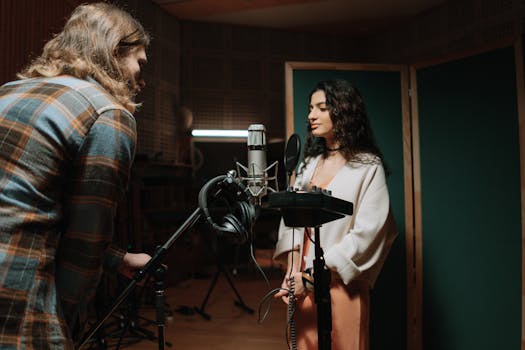
Album artwork and music videos in rock and metal
Rock and metal audiences have been among the most vocal in asking what it means when established acts use AI for album artworks and music videos. The genre’s visual culture is unusually codified, with cover painting and hand-drawn illustration treated as part of the identity of a record. A generated image does not simply look different; it can read as a statement about how much the artist values that tradition.
Music videos complicate matters further. A video involves performers, directors, editors and often a physical shoot. When generated sequences appear alongside filmed footage, audiences have to work out which parts were made and by whom, and that ambiguity is often more disruptive than the generated imagery itself. Clarity about process tends to reduce the friction considerably.
The formulaic feel problem and why visuals affect trust
A musician and technology commentator quoted in reporting on how to identify AI-generated music pointed to a useful test: a song with a formulaic feel, sweet but lacking much substance or emotional weight, can be a sign of AI. That description is about sound, yet it maps neatly onto visuals. Generated images often share the same quality of being pleasant, competent and slightly empty, particularly when prompts are broad and unedited.
Listeners are increasingly applying that instinct across a whole release. Once an audience suspects that one element was generated without care, they tend to scrutinise everything else, including the parts made entirely by hand. Trust in a release is cumulative, and the visual layer is frequently the first place it is either built or broken.

Small tools, practical uses
The tools most accessible to musicians are not always the most ambitious. AutoDraw, described in 2022 coverage of AI artwork generators for musicians as a simple yet effective drawing tool, converts a rough sketch into clip art through a range of features. For a band that needs a quick graphic for a single or a social post, that kind of assistance sits closer to a design shortcut than to authorship.
Broader generative image tools cover the rest of the workflow. In practice, musicians use them for:
- Roughing out cover concepts before briefing a human illustrator
- Producing placeholder artwork for demos and pre-save pages
- Making textured background visuals for lyric videos
- Generating promotional imagery for social channels and merchandise mock-ups
- Exploring colour and mood directions that match the sonic identity of a record
The distinction that matters for most listeners is whether the generated image is a sketchpad or a finished product. A concept board that eventually becomes a painted sleeve reads very differently from a prompt pasted straight into a release.
How indie musicians are using AI visuals to test ideas
Coverage of musicians and AI notes that artists from famous pop stars to innovative indie musicians are using the technology to explore new musical ideas and styles, and to break out of familiar patterns. The visual equivalent is happening at the same time. A solo artist can now test ten directions for a cover in an afternoon, show them to a small audience and commit to the one that fits the record.
That speed is genuinely useful for people who cannot afford a lengthy design process. It is also where discipline matters. Tested directions are research. Released artwork is a claim about the record, and audiences respond to claims differently depending on how they were made.
Working principles for pairing AI visuals with human music
- Decide where the line sits before the release, not after. A musician who has thought through which parts of a record are generated will answer criticism calmly, and that calm reads well in public.
- Treat generated images as drafts whenever possible. Using a tool to explore, then commissioning or hand-finishing the final image, keeps the published artwork tied to human intent.
- Be specific in credit lines. A short note explaining that artwork was generated and then edited tells listeners more than silence, and silence is what usually causes suspicion.
- Match the visual language to the sound. Generated imagery tends toward broad, glossy competence. A record with a rough, handmade sound often needs artwork with matching texture.
- Keep the human work visible. If the music is performed, recorded and mixed by people, say so plainly on the release page rather than leaving listeners to guess.
The context on streaming and human authorship
The pressure around this subject is not only aesthetic. Coverage of proposals to protect human artists notes that AI-generated music makes up an increasing share of what is available on streaming platforms, which pushes the question of labelling and disclosure into policy territory. Visual disclosure is not yet settled either. Musicians who want to be precise about their own credits should check the current guidance from their distributor, label or platform before release, since requirements change and vary between services.
For artists working at the meeting point of image and sound, the practical answer is fairly simple. Tools can carry a great deal of the labour, but the decisions that make a release coherent, about which image belongs to which record, still come from a person. Musicians who keep those decisions visible tend to keep the trust of the people listening, and that trust is worth more than the hours saved on a sleeve.
Frequently Asked Questions
Do listeners mind if musicians use AI art for covers?
Reactions vary widely. In rock and metal discussions particularly, generated artwork is often seen as a statement about how much an artist values the genre’s illustration tradition. Listeners tend to object less to the tool itself and more to silence about it. A clear credit line frequently lowers the temperature of the response.
Is it hypocritical to use AI visuals but human-made music?
Some listeners argue exactly that, and the criticism has been raised directly in discussions about identifying AI-generated releases. The counter-argument is that artwork and recorded performance are different products with different budgets. Both views can be held honestly. What matters is that the artist has actually thought it through before release.
How can I tell whether a cover image was AI-generated?
There is no reliable test. Common signals include a formulaic feel, an over-polished surface and details that do not quite resolve, which echoes the way a musician and technology commentator described AI-generated music as sweet but lacking substance. These are instincts rather than proof. If it matters to you, check the artist’s own credits before deciding.
Which AI art tools are useful for musicians on a budget?
Coverage of AI artwork generators for musicians has highlighted accessible options such as AutoDraw, which turns a rough sketch into clip art. Broader generative image tools are also widely used for demos, lyric video textures and social graphics. Treat any output as a starting point, and check the licence terms of whichever tool you use before releasing anything commercially.
</||DSML|| parameter>