

Village Mysteries: Why English Villages Suit Crime Fiction Perfectly
There is something quietly irresistible about a village mystery. A picture-postcard English village, all honey-coloured stone and neat cottage gardens, seems an unlikely home for murder. Yet crime fiction has returned to this setting again and again, and readers have never tired of it. From Miss Marple’s St Mary Mead to the Cotswolds villages of contemporary cosy series, village mysteries remain one of the most beloved corners of the crime genre. The reasons run deeper than nostalgia, although that certainly plays its part. The village setting gives crime writers something that city streets cannot: a closed community, a cast of familiar faces, and a thousand small secrets waiting to be uncovered.
What Are Village Mysteries?
English village cosy mysteries are a subgenre of cosy crime fiction that carries readers to the idyllic, yet deceptively perilous, villages of rural England. The setting is central to the appeal. As the popular Goodreads collection of English Village Mysteries puts it, “From the Cotswolds to Cumbria, murder lurks around the corner of the next village green.” That line captures the genre’s defining trick: the contrast between a peaceful facade and the dark events unfolding beneath it.
Cosy mysteries in general share certain conventions. They typically involve a minimum of violence and gore, and they are usually set in quaint villages or small towns rather than sprawling cities. The focus falls on the puzzle, the characters and the slow unravelling of secrets rather than on graphic crime scenes. Within that broad formula, the English village has become the most iconic backdrop of all.
Why the English Village Setting Works So Well
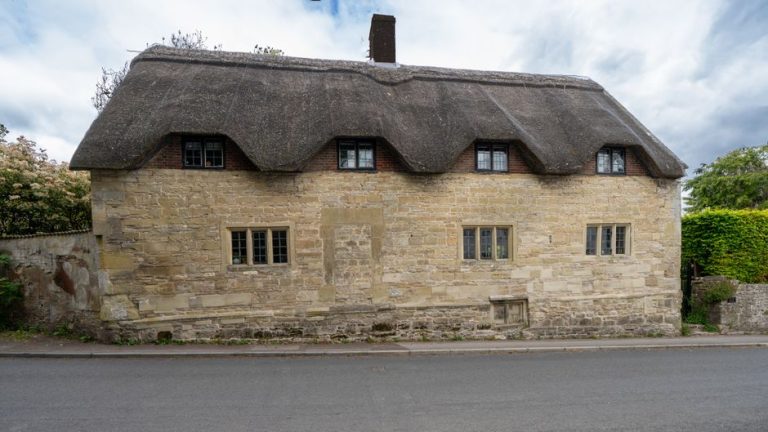
The English village is more than a backdrop in these stories. It is almost a character in its own right. Rolling countryside, cobbled streets and grand medieval manors create perfectly pastoral backdrops for murder most foul. The beauty of the surroundings makes the crime feel more shocking, while the village’s small scale makes every clue, every alibi and every suspicious glance part of a tightly woven puzzle.
Village life also brings a particular kind of intimacy. People know their neighbours, their routines and their histories. A stranger stands out immediately. An unusual visitor, a late-night light in a cottage window, a whispered argument in the pub: these details carry real weight in a village in a way they never could in a busy city. For the mystery writer, that intimacy is gold. It means every character can be scrutinised, every relationship examined, and every secret eventually dragged into the light.
The Charm of the English Countryside
There is also the simple pleasure of the setting itself. Village mysteries invite readers into a world of country churches, village greens, teashops and winding lanes. Even when the plot turns sinister, the reader gets to spend time in a landscape that feels comforting and familiar. The promise of a beautiful English village hiding some dark secrets sums up the appeal neatly. Readers get the warmth of the setting and the thrill of the mystery in the same book.

The Enduring Appeal of the Cosy Village Mystery
The cosy village mystery has endured for generations because it satisfies two very different cravings at once. The first is the desire for comfort, for a world that feels safe, orderly and recognisable. The second is the thrill of disruption, the pleasure of watching that orderly world shaken by something unexpected. A village mystery delivers both. The reader can settle into the rhythms of village life while knowing that a satisfying puzzle is waiting just around the corner.
There is also the question of scale. A village is small enough that the reader can hold the whole community in their head. Every suspect is introduced, every relationship mapped, every motive weighed. The best village mysteries play fair with the reader, scattering clues throughout the story so the resolution feels earned rather than contrived. That sense of a solvable puzzle, set against a charming backdrop, is what keeps readers coming back to the genre.
The Miss Marple Legacy
No discussion of village mysteries can ignore Agatha Christie, and no character is more closely associated with the English village than Miss Marple. Christie placed her sharp-eyed amateur detective in the village of St Mary Mead, and readers never looked back. Murder at the Vicarage is the first Miss Marple novel, The Moving Finger is the third, and 4:50 From Paddington is the seventh. Together they helped define the template for the genre.
For readers wondering where to begin with Christie’s village mysteries, Mrs. McGinty’s Dead is frequently recommended as one of the best village mysteries in the Christie canon. It is a story that leans into the genre’s strengths: a small community, a cast of plausible suspects, and a detective who must untangle the everyday details of village life to find the truth.
Christie’s approach proved that a village could sustain an entire mystery. The closed circle of suspects, the limited geography and the web of personal histories gave her everything she needed. Modern authors have followed her lead ever since.

Modern Village Mystery Series Worth Exploring
The tradition continues today with a steady stream of village-set mystery series. Debbie Young’s Sophie Sayers Cozy Mysteries are a fine example. This fun series of classic cosy mystery novels is set in a village in the Cotswolds. The books follow the exploits of a young English woman who inherits a country cottage from her Great Auntie May, a famous travel writer, and starts a new life in a little village. Before long she discovers that adventure can be found close to home, with all the complications, curiosities and crimes that village life can bring.
Margaret Mayhew’s Village Mysteries series offers another long-running take on the form. The series began with Old Soldiers Never Die in 1999 and continued with Three Silent Things (2008), Dry Bones (2012), The Seventh Link (2014) and Bitter Poison (2015). Readers who enjoy a traditional village mystery with a measured pace and a strong sense of place will find plenty to appreciate here.
Even the box set market has embraced the subgenre. The Village Mysteries, a four-book collection of cosy murder mysteries by Margaret Mayhew, is described as four beautifully written cosy village murder mysteries in one great-value box set, built around a beautiful English village with some dark secrets. It is a reminder that the appetite for this kind of story shows no sign of fading.
Village Mysteries Beyond England
The appeal of the village mystery is not confined to England. Neighbouring countries have their own versions, and readers of English village mysteries often find them just as satisfying. The Irish Village Mysteries series by Carlene O’Connor, which opens with Murder in an Irish Village, transplants the formula to a small Irish community with its own customs, loyalties and secrets. The sense of a close-knit place where everyone knows everyone else translates easily across the Irish Sea.
What these stories share is the conviction that small communities hold big secrets. Whether the setting is an English village green or an Irish village pub, the dynamics are similar. Everyone has a history. Everyone has something to hide. And someone, eventually, has a motive for murder.

Building Your Village Mystery Reading List
If you are new to village mysteries, the good news is that there is no shortage of material. The Goodreads community maintains a list of English Village Mysteries that runs to 201 books, spanning classic and contemporary authors alike. It is a useful starting point for anyone who wants to explore the subgenre in depth.
For a first taste, try the Miss Marple novels, particularly Murder at the Vicarage, The Moving Finger or 4:50 From Paddington. If you would prefer something more recent, the Sophie Sayers novels offer a warm, witty introduction to the modern village mystery. And for readers who like their mysteries with a touch of the traditional, Margaret Mayhew’s Village Mysteries series delivers a dependable, satisfying read.
The beauty of the genre is that it rewards both casual readers and devoted fans. You can dip into a single book or commit to a long-running series. You can stay close to the English countryside or cross the border to Ireland for a fresh take on the formula. Either way, the village will be waiting, its cottages glowing in the evening light and its secrets ready to be told.
Frequently Asked Questions
What is a village mystery?
A village mystery is a crime story set in a small rural community, most often an English village. These novels typically follow the conventions of cosy crime: little violence or gore, a cast of local characters, and a puzzle that is solved through observation and conversation rather than forensic procedure. The village setting is central to the plot, providing a closed circle of suspects and a rich store of local secrets.
Why are English villages such a popular setting for crime fiction?
English villages offer a natural contrast between beauty and danger. The idyllic scenery of rolling countryside, cobbled streets and medieval manors makes crime feel more surprising, while the close-knit nature of village life means every character can be examined. Murder feels more shocking in a quiet village, which makes the mystery more compelling and the resolution more satisfying.
Which village mystery books should I read first?
Agatha Christie’s Miss Marple novels are the classic starting point. Murder at the Vicarage is the first in the series, while Mrs. McGinty’s Dead is often singled out as one of the best village mysteries in the Christie canon. For a modern option, try Debbie Young’s Sophie Sayers Cozy Mysteries, set in a Cotswolds village, or Margaret Mayhew’s Village Mysteries series.






2 Comments