
The Best Mystery Novels to Read: A Ranked List for Every Sleuth
Choosing a mystery to read is a peculiar problem. The genre is enormous, the shelves are crowded, and the difference between a clever puzzle and a slow-burning thriller matters far more here than it does in most other kinds of fiction. Pick the wrong one and you will spend a fortnight waiting for a body to turn up. Pick the right one and you will be up until two in the morning, certain you have worked it out, and completely wrong.
This ranking is built for readers who want a starting point they can trust. It leans on titles that keep appearing on curated lists, reader award results and bookseller recommendations, from Arthur Conan Doyle’s The Hound of the Baskervilles through to the reader favourites singled out in 2025.
How this ranking was put together
The shortlist came from a spread of sources rather than a single poll. Publisher reading lists, bookseller crime sections, reader award results and long-running rankings all fed into it, including the Sunday Times list of the 100 best crime novels and thrillers since 1945 and the Goodreads Choice Awards mystery and thriller category for 2025.
Titles that recur across different kinds of lists, compiled by different kinds of readers, tend to be the ones worth your time. The order below reflects a mix of staying power, influence on the genre, and how well a book works for someone who has not read much mystery before. Treat it as an argument rather than a verdict.
The best mystery novels to read, ranked
| Rank | Title | Author | Why it earns its place |
|---|---|---|---|
| 1 | The Hound of the Baskervilles | Arthur Conan Doyle | Appears at the top of widely shared best-of lists and remains the obvious entry point for classic detection. |
| 2 | The Murder of Roger Ackroyd | Agatha Christie | A fixture on must-read mystery round-ups and on readers’ pick lists. |
| 3 | The Day of the Jackal | Frederick Forsyth | A recurring best-of title that shows how much tension a pursuit can carry. |
| 4 | Gone Girl | Gillian Flynn | A landmark of the modern psychological mystery and one of the most discussed books of its era. |
| 5 | The Silent Patient | Alex Michaelides | A favourite on reading group lists and best-of round-ups alike. |
| 6 | The Truth About the Harry Quebert Affair | Joël Dicker | One for readers who want a substantial, slowly assembled mystery. |
| 7 | A Flicker in the Dark | Stacy Willingham | A contemporary pick that keeps appearing on book club recommendations. |
| 8 | The Murder List | Hank Phillippi Ryan | Another title that recurs on book club and best-of lists. |
| 9 | The Impossible Fortune | Richard Osman | The fifth Thursday Murder Club novel, for anyone who wants an established series. |
| 10 | The Tenant | Freida McFadden | Named among readers’ favourites in the 2025 mystery and thriller awards. |
| 11 | Not Quite Dead Yet | Holly Jackson | A newer title voted onto reader favourite lists. |
| 12 | Beautiful Ugly | Alice Feeney | Selected by readers as a standout mystery of the year. |
No list of this size can hold everything. The Sunday Times ranking of the best crime novels and thrillers since 1945 also makes room for titles such as The Girl with the Dragon Tattoo, The Deadly Percheron, The Franchise Affair, Blacklands and Dodgers. New York Times bestseller round-ups have featured Deadly Cross, A Time for Mercy, Daylight, The Law of the Innocence, Moonflower Murders and The Sentinel. Penguin Random House readers’ picks include How to Solve Your Own Murder and Yesteryear. Any of those would make a fine next read.
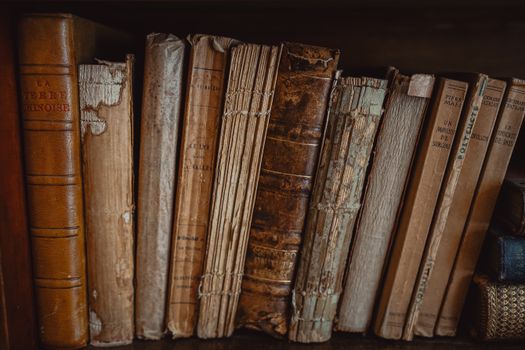
The golden age and the puzzle tradition
Everything in the mystery genre traces back through the golden age. Conan Doyle’s The Hound of the Baskervilles dates from 1902 and still tops best-of lists more than a century later, which says something about how well a fair-play puzzle ages. Christie carries the same weight, and The Murder of Roger Ackroyd is the book most often named when readers argue about her finest work.
Waterstones points readers towards classic whodunits from Agatha Christie and Raymond Chandler alongside newer crime writing. The appeal is simple and durable: a closed circle of suspects, a detective who notices what everyone else has missed, and a solution the reader could in theory have reached. If you like to think critically while you read, this is where to begin.
When a mystery becomes a thriller
The line between the two is blurrier than the shelf labels suggest, and most best-of lists simply fold them together. The Sunday Times ranking covers crime novels and thrillers published since 1945, and bookshops such as Waterstones shelve crime, mystery and thrillers as a single category.
Frederick Forsyth’s The Day of the Jackal, published in 1973, is the classic example of a book built on momentum rather than a drawing room reveal. It sits comfortably beside Gillian Flynn’s Gone Girl, published in 2011, which showed how much suspense can be generated by a narrator who may not be telling the whole truth. If you prefer pace to puzzle, start here.
Modern psychological mysteries
Contemporary publishing has leaned hard into psychology, and readers have followed. The Silent Patient by Alex Michaelides, A Flicker in the Dark by Stacy Willingham, The Murder List by Hank Phillippi Ryan and The Truth About the Harry Quebert Affair by Joël Dicker all appear on book club and reader recommendation lists.
These books tend to trade the detective’s logic for the character’s memory, which makes them gripping but sometimes unsettling. They are excellent choices for readers who want to feel the mystery rather than solve it from an armchair.

Cosy mysteries, village secrets and long-running series
Not every reader wants dread and dread alone. The cosy tradition offers the same satisfaction with fewer sleepless nights, and it is having a strong run. Richard Osman’s Thursday Murder Club series has reached its fifth instalment with The Impossible Fortune, and Freida McFadden’s The Tenant and Holly Jackson’s Not Quite Dead Yet were both singled out by readers in the 2025 mystery and thriller awards.
Series are the quiet workhorses of the genre. A recurring sleuth means you already know the voice before you open the book, which is precisely the comfort that cosy readers are looking for. Ann Cleeves and Ian Rankin are the names Waterstones highlights for crime writing with a strong sense of place, and village settings remain one of the genre’s most reliable pleasures.
This is the tradition we write in at The Mystery Collective. Clara Willow, Gideon Harrow and Rosalind Fenwick each work in these familiar spaces, with paperbacks and eBooks available if you would like to try a cosy mystery from an independent imprint.
How to choose your next mystery novel
- Decide whether you want a puzzle or a pursuit. Fair-play detection and chase-driven thrillers ask very different things of the reader.
- Check the era. Golden age whodunits have a formality that some readers love and others find slow.
- Think about tone. Cosy village mysteries and psychological thrillers can share a structure while feeling nothing alike.
- Consider whether you want a standalone or a series. A first instalment is a low-risk way to find an author you will follow for years.
- Read the first chapter before you commit. A mystery has to hook you early, because the whole contract depends on you wanting to know.

Mystery novels that work well for book clubs
Some mysteries invite discussion more than others. Book club recommendation lists repeatedly feature The Silent Patient, The Murder List, A Flicker in the Dark and Then She Was Gone, largely because they raise questions about memory, motive and how much a narrator can be trusted. A book that leaves the group disagreeing is usually a better evening than one everybody admired politely.
Frequently Asked Questions
What is the best mystery novel to read first?
The Hound of the Baskervilles by Arthur Conan Doyle is the safest starting point, since it appears at or near the top of nearly every curated best-of list. If you would rather begin with something modern, Gone Girl by Gillian Flynn is a strong introduction to contemporary mystery writing. Choose the era that already appeals to you and work outwards from there.
What is the difference between a mystery and a thriller?
Publishers, bookshops and award categories generally treat them as one broad group, and the Sunday Times ranking covers crime novels and thrillers together. In practice, mysteries tend to centre on a puzzle and a solution, while thrillers lean on tension and momentum. Many of the best books sit somewhere between the two.
Are there mystery novels without graphic violence?
Yes. The cosy tradition exists precisely for readers who want the puzzle without the gore, and it usually means village settings, amateur sleuths and a solution rather than a chase. Waterstones points readers towards Christie and Chandler for classic whodunits alongside modern crime writers such as Ann Cleeves and Ian Rankin. It is still worth reading a sample before buying.
Which mystery series should I start if I like recurring characters?
Richard Osman’s Thursday Murder Club series is a good place to begin, and The Impossible Fortune is the fifth book in the run. For something with a stronger sense of place, Ann Cleeves and Ian Rankin are the authors booksellers most often recommend. Committing to a series is one of the cheapest ways to guarantee your next several reads.
Do classic mystery novels still hold up today?
Many do, and the lists prove it. The Hound of the Baskervilles, first published in 1902, still appears on modern best-of round-ups, and The Murder of Roger Ackroyd remains a fixture on readers’ pick lists. The pacing is slower than a contemporary thriller, but the construction is often tighter. Read the first chapter and judge for yourself.