AI Surrealist Art: Crafting Dreamlike Images with Machine Learning
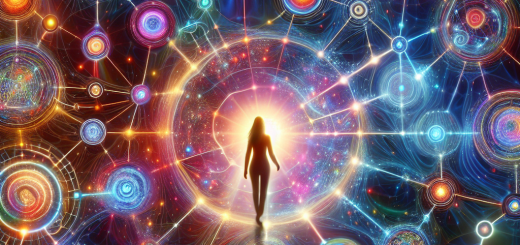
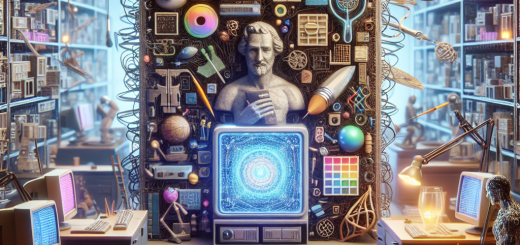
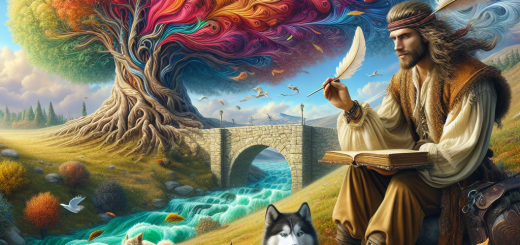
There is an unmistakable dreamlike quality to many AI images. Edges grow hazy, familiar objects bend into odd shapes, and scenes seem to hover somewhere between memory and imagination. Creators often note that AI is especially good at a creepy or spooky look that reaches the viewer on several levels at once. That is why so many artists now turn to machine learning when they want to make surreal work. A simple text prompt can generate the kind of strange, atmospheric imagery that once took painters weeks to build by hand. The result is a fast-growing creative practice known as AI surrealist art.
Surrealism at 100: Breton’s Manifesto and Its Legacy
In 1924 the French poet and critic André Breton published the Surrealist Manifesto, a 4,000-word text that announced a new direction for art. Breton believed the imagination could bypass logic and that dreams offered a form of truth which rational thought tended to suppress. The movement he founded brought together painters, writers and thinkers who wanted to place the unconscious at the centre of creative work. Nearly a century later, the images produced by machine-learning models feel eerily akin to the output of Breton’s circle. Art critics have noticed the resemblance and begun to ask whether surrealism’s own past can show where AI-generated art is headed.
That question matters because surrealism was never a single style. It was a set of methods built on chance, unexpected combinations and freedom from conscious control. Those working in the tradition deliberately avoided straightforward description in favour of emotionally charged scenes. Modern AI models do something comparable whenever they combine unrelated elements into a single coherent picture. The philosophical link between the two practices is strong, which is why many artists treat AI surrealist art not as a passing trend but as a continuation of a century-old experiment.
Why AI Images Look So Much Like Dreams
Part of the explanation is technical. Generated pictures often contain missing details, skewed text and numerals, hazy edges and a general sense of ambiguity. Nonsense can appear in the margins of an otherwise convincing scene. These features are usually described as flaws, yet they are precisely the characteristics of dream imagery. In a dream, faces shift, clocks refuse to stay still, and environments dissolve before they can be examined closely. AI reproduces that experience of instability without deliberately trying to do so.
For artists, these quirks are an advantage rather than a limitation. A viewer confronted with an AI image may struggle to explain why it feels familiar and alien at the same time. That tension is a core ingredient of surrealism. When an artist leans into the softness and ambiguity instead of removing them, the machine becomes a willing collaborator in producing work that behaves like a dream.
What a Surrealism Generator Actually Does
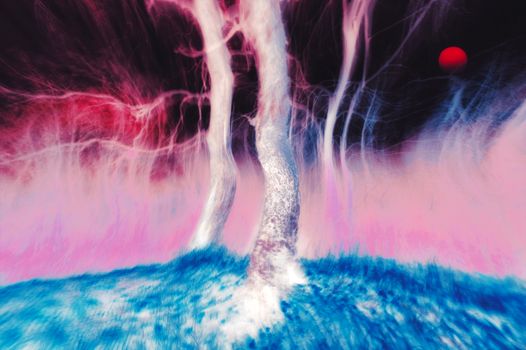
A surrealism generator is an AI tool that creates images in a surrealist style. Typical results feature melting clocks, dreamlike landscapes and unexpected juxtapositions of objects that would never share the same space in ordinary life. The process is simple: the artist types a text description, and the software returns a finished image in seconds. Many online tools are free to use, and they require no planning or sketching before the first prompt is entered.
Adobe Firefly offers one well-known example. Its surrealism art generator uses generative AI to produce detailed surrealist images from simple text prompts. Rather than asking the user to draw or compose a scene, the tool translates natural language directly into a picture. This low barrier to entry has made the form popular with digital artists who want to experiment quickly and inexpensively.
Common Subjects in AI Surrealist Art
- Melting clocks and soft, malleable timepieces
- Dreamlike landscapes with impossible scale and lighting
- Unexpected juxtapositions of animals, machines and architecture
- Softly lit portraits with distorted or unfinished features
- Weird animal robots that feel strangely gentle
These subjects work well because they are familiar enough to be recognised and strange enough to unsettle. The best prompts tend to describe a mood first and an object second.
Who Is the Artist in AI Surrealist Art?
When AI surrealist art first gained attention, the criticism came quickly. Some critics argue that AI art is identical to human-made work and therefore deserves less serious consideration. Others worry that a machine cannot possess the intention or emotional history that shapes a meaningful artwork. The counter-argument, supported by recent academic commentary on creative practice, is that AI tools play a similar role to the generative methods used by the surrealists, though in a significantly more co-creative way. The machine does not simply copy an existing painting; it responds to a prompt, introduces chance, and offers the artist material that could not have been planned in advance.
That makes the human role different but not smaller. The artist chooses the words, selects from the outputs, edits the strongest images and decides when an accident is worth keeping. In this reading, prompting is itself a creative act, similar in spirit to the automatic writing techniques explored by Breton and his followers. The artist and the machine produce the picture together.
When Strangeness Becomes Routine
Not everyone is convinced that the new technology serves surrealism well. An essay published in early 2024 carried the blunt title “AI Is Making Surrealism Boring”. Its argument was that when dreamlike images can be produced on demand, strangeness quickly becomes familiar. The unexpected loses its power once every feed is full of it. Surrealism depended on shock and surprise, and those qualities are difficult to maintain when the same visual tricks appear thousands of times a day.
This critique is a useful reminder for artists working in the medium. The tool is only part of the equation. To keep the work surprising, the creator must look beyond the easiest effects and find images with genuine emotional weight. The absence of obvious logic may be the starting point, but it is not enough on its own.
Practical Ways to Create Dreamlike Work
Artists experimenting with AI surrealist art often describe the most successful outputs as soft and surreal. There is a gentle quality to those images that makes them feel like illustrations of a half-remembered dream. To reach this effect, begin with a short prompt that names both an atmosphere and a subject. Avoid explaining a full narrative in the text box, and allow the generator to fill the gaps with its own strange choices.
Because AI images often contain blurry edges and small mistakes, it helps to embrace those imperfections as part of the aesthetic. Generate several versions of the same scene and compare them. A single prompt can produce wildly different results, and one version may contain an accident that makes the whole piece work. Those who want to push further can animate their favourite still images or add AI-generated music, both of which extend the dreamlike mood into time and sound.
Starting Points for Your First Prompt
- A silent traveller crossing an endless surreal road
- A soft, dreamlike forest filled with gentle mechanical animals
- A clock melting over the edge of a familiar object
- A landscape where the sky and ground exchange places
- A portrait with calm features and impossible surroundings
Repetition is part of the method. The first output rarely matches the image in your head, but the fourth or fifth version can point you somewhere completely unexpected.
Where AI Surrealist Art Might Go Next
Surrealism has always depended on the tools available to its makers. Breton used words and paint; later artists used photography, collage and film. Today’s creators use neural networks, and the technology is still improving. At some point generators may become so refined that hazy edges, skewed text and other dreamlike accidents disappear. When that happens, artists will have to construct surrealism with intention rather than rely on the machine’s charming failures.
That future may actually bring the practice closer to the spirit of the original movement. The surrealists believed that the most powerful art sat at the meeting point of conscious choice and unconscious impulse. AI surrealist art offers exactly that meeting point. As the field matures, the artists who succeed will be those who treat the technology as a genuine creative partner and who keep asking what a hundred-year-old movement can teach a new generation of dreamers.
Frequently Asked Questions
What is AI surrealist art?
AI surrealist art is imagery created by a generative AI tool in a surreal style, usually from a simple text prompt. Typical results include melting clocks, dreamlike landscapes and unexpected combinations of objects. Software designed for this purpose is often called a surrealism generator, and it lets anyone create surreal images in seconds without planning or sketching. The artist guides the machine, but the machine contributes its own strange interpretations.
How do I create AI surrealist art?
Use a text-to-image generator such as Adobe Firefly’s free surrealism generator. Type a description of the scene you want, for example a soft dreamlike landscape or a portrait filled with unusual objects. The tool produces a detailed surrealist image in seconds. Generate several variations, keep the strongest results, and adjust your prompt if the output does not match the mood you intended.
Is AI surrealist art as valuable as human-made surrealism?
Opinions differ. Some critics argue that AI art is identical to human work and therefore carries less meaning. Others note that AI tools play a similar role to earlier generative methods used by the surrealists, though in a significantly more co-creative way. In practice, the value of the finished piece depends on the artist’s judgement in selecting, editing and presenting the machine’s output.
Why does AI art look so dreamlike?
Generated images often contain missing details, skewed text and numerals, hazy edges and ambiguity. These qualities mirror the visual experience of real dreams, where objects appear soft, scenes shift without warning and meaning stays just out of reach. The brain reads those signals as dreamlike, which is why AI imagery feels so closely connected to the surrealist tradition even when no conscious design inspired it.