AI Art Galleries Online: How They Work and What Comes Next
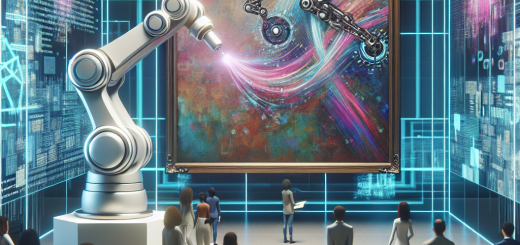
Online galleries devoted to machine-made art have moved from curiosity to something closer to an established format. A search for ai art galleries online now turns up curated showcases, 3D exhibition spaces you can move through with a mouse or a headset, artist-run portfolio platforms, and software that promises to build a whole exhibition in minutes. The picture is messier than the marketing suggests, and more interesting for it.
Growth has happened in several directions at once. Some spaces exist mainly to document what artists have made with machine learning. Others exist to sell. A few are built by galleries and cultural organisations as operational tools, where the viewing experience barely changes at all.
What counts as an AI art gallery online
The label covers at least three overlapping things, and it helps to keep them separate.
- Curated showcases that present machine-made work as a collection, usually with artist names and dates attached.
- Virtual exhibition spaces, where artworks are hung in a walk-through 3D room rather than listed on a page.
- Artist-run selling platforms, where the gallery function is really a portfolio with a checkout behind it.
A single project can sit in more than one of these buckets. A virtual room can also sell prints. A selling platform can also curate. The distinction matters mainly because it sets expectations about what a visitor will find.
The early wave of machine-made work
One of the clearest records of early AI art curation sits in the Highlights section at aiartonline.com, which gathers work made with generative systems and presents it as a collection rather than a novelty feed. Most of the pieces there date from 2019, a useful reminder that machine-made art did not begin with the current generation of image tools.
PANSPERMIA (2019) by Karen ann Donnachie and Andy Simionato is described as a video artwork created entirely with machine learning, assembled from clips generated by artificial means. Moving image plus a model doing the generating is one of the harder combinations to present well online, and it remains one of the more demanding forms of AI art to host.
The same collection shows how varied the approaches were. Jake Elwes made CUSP (2019), which takes a familiar childhood location on the Essex marshes and reframes it by inserting images at random. Holly Grimm’s Subtle Bodies is a series of AI-generated artworks that mimic her own figurative watercolours, a good example of using a model to extend a personal style rather than replace it.
| Work | Artist | Year | What the record describes |
|---|---|---|---|
| PANSPERMIA | Karen ann Donnachie and Andy Simionato | 2019 | A video artwork created entirely with machine learning, using clips generated by artificial means |
| CUSP | Jake Elwes | 2019 | A familiar childhood location on the Essex marshes, reframed by inserting images at random |
| Entangled II | Scott Eaton | 2019 | Listed in the same Highlights collection |
| (un)stable equilibrium | Terence Broad | 2019 | An ongoing series built around generative neural networks |
| Subtle Bodies | Holly Grimm | Not stated | A series of AI-generated artworks that mimic the artist’s figurative watercolours |
The collection also lists a 2019 work titled What I saw before the darkness I will not forget, described in terms of artificial intelligence creating hyperrealistic imagery. Taken together, these pieces read less like a single movement and more like a set of individual experiments, each with its own rules.
Virtual exhibition spaces built for artists
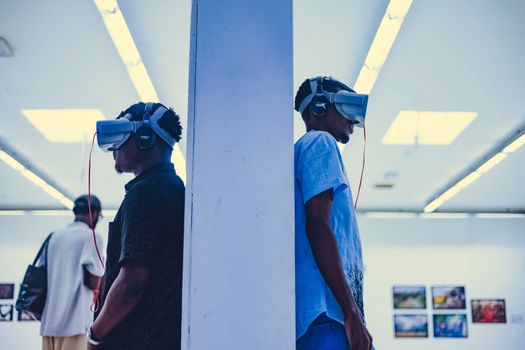
The more recent shift is not about the artwork but about the room it hangs in. Virtual galleries have become a product category in their own right, aimed at artists, galleries and collectors who want something more spatial than a grid of thumbnails.
Personal 3D spaces on established platforms
An article published on 12 August 2025 describes ArtMajeur by YourArt offering a personal 3D virtual exhibition space for artists, galleries and collectors. That matters because it puts the exhibition tool inside an existing art platform rather than asking artists to adopt a separate service. A body of work can be arranged and paced like a show instead of being dropped into a feed.
Standalone studio apps
Arte: 3D Art Gallery Studio takes the other route. Its App Store listing describes it as free, designed for iPad, rated 16+, in the Graphics & Design category, developed by Narasimha Bhat and available in English plus three more languages. The pitch is speed: create and publish virtual art exhibitions in minutes, with immersive 3D gallery experiences intended to reach viewers worldwide.
Speed is both the selling point and the risk. If an exhibition takes minutes to assemble, it can also take minutes to abandon. The projects that hold attention tend to be the ones where someone thought about sequencing and lighting, not just uploading.
Platforms that sell rather than only show
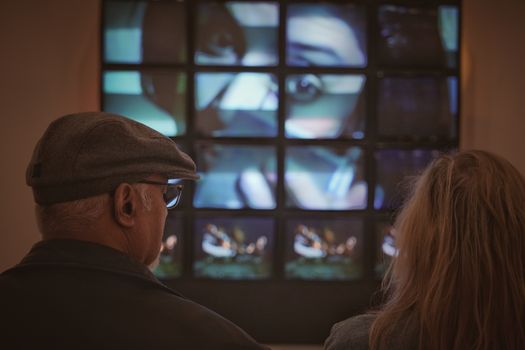
The commercial side has its own model. Handprints To AI Art Series describes itself as offering artists a commission free and contract free online platform to sell their creations and engage with clients through portfolio pages. For artists who have been selling through social media messages and awkward spreadsheets, that structure removes a lot of friction.
Terms on any platform can change, and commission structures in particular are worth reading in full before uploading a body of work. Check the current agreement on the platform itself rather than relying on a summary.
When AI sits behind the gallery rather than in the frame
Not every use of AI in the art trade is visible to the visitor. Art Circles is described as the first platform bringing AI into art world operations at scale, built for galleries, fairs and cultural organisations. That is a different proposition from an AI art gallery. The art on the walls may be entirely human-made while the software behind the scenes handles administration.
Brand-led projects have taken a third approach. One campaign, created by the agency Monks, was built directly within Google’s AI ecosystem using Gemini, Veo and Nano Banana, and invited people to reimagine iconic artworks. Work like this sits somewhere between exhibition, advertising and participation exercise, and it shows how quickly the line between gallery and product demonstration can blur.
Hobbyist galleries and the do-it-yourself route
Some of the most direct examples come from individual developers. One creator built a virtual art gallery in the Godot engine featuring AI-generated work, producing the art with VQGAN+CLIP and reusing a player controller from an earlier first-person project. There is no institutional backing in that story and no curation committee, just a person deciding that a gallery was the right container for a set of images.
That approach has limits. A homemade gallery rarely has the reach of a platform and is unlikely to attract collectors on its own. What it does show is that the technical barrier to building one is lower than most people assume.
Scepticism from audiences is part of the story
Not everyone is enthusiastic. A thread on the San Francisco subreddit saw a user venting about art galleries in the city using AI generation, describing an AI video on Facebook that showed a painting being cut, with a woman in the scene. Whatever the merits of that particular clip, the reaction is informative. Audiences notice when AI is used in a gallery context, and they do not always like it, especially when it appears to replace human labour or arrives without context.
That puts a premium on honesty. Galleries that label work clearly, explain which tools were involved and credit the human decisions behind an image are likely to have an easier time than those that leave visitors guessing.
What the next few years could look like
If current tools continue to mature, a few directions seem plausible. Virtual exhibition spaces will probably become a normal option rather than a novelty, particularly for artists who show work internationally and cannot ship physical pieces. Operational AI, of the kind Art Circles is aiming at, may become unremarkable behind the scenes. The split between curated showcases and commercial platforms will likely sharpen, because the two need different things from their audiences.
The harder question is trust. A gallery is a promise that someone has made a judgement about what is worth your attention. Software can help build the room, and models can help make the work, but the judgement still has to come from somewhere. Where that judgement sits, with an artist, a platform or an algorithm, is the real dividing line in this field.

Open questions to verify yourself
Several practical questions come up often and are not settled by the sources behind this piece. If any of them affect you directly, check current guidance from the relevant platform, authority or professional body.
- Can you legally sell AI-generated art, and does it depend on how the model was trained or how much human input shaped the final piece?
- Which platforms have restricted or banned AI-generated work, and how do they enforce it?
- Which site suits a particular kind of AI art, given that reach, fees and audience differ widely?
- What type of art is in high demand right now, and how much of that demand is for machine-assisted work?
Frequently Asked Questions
What is an AI art gallery online?
It is a website or app that presents artwork made with machine learning models. Some are curated showcases documenting what artists have produced. Others are three-dimensional virtual exhibition spaces. Others again are artist-run platforms where works are displayed, sold or both. The format varies widely, so check whether a given gallery is showing, selling or simply collecting.
Are virtual AI art galleries free to use?
It depends on the tool. Arte: 3D Art Gallery Studio is listed as free in the App Store, while other services may charge for hosting, higher resolution or a custom domain. Selling platforms sometimes describe themselves as commission free, but terms can change, so read the current agreement before uploading work you care about.
Do physical galleries use AI as well?
Some do. Art Circles is described as a platform bringing AI into art world operations at scale, built for galleries, fairs and cultural organisations. In those cases the technology tends to sit behind the scenes, handling administration rather than making the artwork. A visitor may never notice it, which is rather the point.
Can I sell AI-generated art through an online gallery?
Some platforms are built for it. Handprints To AI Art Series, for example, describes itself as a commission free and contract free platform for selling work and engaging with clients through portfolio pages. Whether a specific gallery accepts AI-generated pieces, and on what terms, is something to confirm directly, since policies differ.
Why do some people object to AI in galleries?
Reactions vary. A widely read thread in a San Francisco community group showed a user complaining about galleries in the city using AI generation, and about an AI video featuring a painting being cut. Concerns usually centre on disclosure, on the sense that human work is being displaced, and on whether the result carries real intent.