AI Art Criticism Online: Handling Public Feedback as an Artist
Putting AI-assisted work online invites a reaction that most traditional painting never attracts. A landscape or a portrait might be judged on composition and colour; an AI piece is often judged on whether it should exist at all. That shift in the conversation catches many artists off guard, because the comment arriving in your inbox is rarely about the thing you actually made. It is about the tool, the training data, the labour debate and, quite often, someone else’s fear about their own livelihood.
Handling that well is a skill in itself. It sits somewhere between media training, community management and basic self-preservation. The aim here is not to win arguments but to keep your practice intact, keep your portfolio page readable and take the useful notes while letting the rest pass through.
Why AI art attracts a sharper kind of comment
The hostility is not imagined. In January 2023, an online campaign using the hashtag #NotoAIArt saw artists sharing concerns about the legality of AI image generators and about how those tools have affected them. Reporting on the reaction captured the tone of the moment in a single line from an illustrator who described AI imagery as “the opposite of art”.
Those are strong words, and they come from a real place. Illustrators watched a market they had spent years training for shift underneath them, and the argument about consent, credit and compensation is still unresolved. When someone lands on your page and types something sharp, you are often receiving the accumulated frustration of a much wider dispute. Knowing that does not make the comment pleasant, but it does make it easier to read accurately.
Separate the argument about the medium from feedback on the work
Most public criticism of AI art falls into two distinct conversations, and mixing them up is where artists get stuck. The first is the medium argument: whether AI-generated images should be made, sold or exhibited, and on what terms. The second is the craft argument: whether this particular image works.
The medium argument is genuinely contested and you are unlikely to settle it in a comment thread. The craft argument, by contrast, is where you can actually learn something. If a stranger says your subject’s hands are malformed or that the lighting contradicts itself, that is a note about the work. If a stranger says you are not an artist, that is a position in a debate you did not start and cannot end in one reply.
Sort the comment before you answer it
A little categorisation saves a great deal of wasted emotion. Before you type anything, decide which of these you are looking at.
- Craft feedback. Specific, checkable observations about anatomy, perspective, colour, resolution or presentation. These are the ones worth saving, even if the delivery is rude.
- Ethical objection. A principled disagreement with AI image generation itself. It may be aimed at you but it is not really about your picture, and a defensive reply rarely moves anyone.
- Taste mismatch. The commenter simply does not like the style. This needs no response at all.
- Bad faith. Name-calling, pile-ons, bait. Anything designed to keep you typing. Mute, block or delete according to your own house rules and move on.
Build a deliberate pause into your routine
The single most useful habit is delay. Read the comment once, in full, and then close the tab. Return to it the next day, or at least a few hours later. Criticism that seemed like an attack at midnight often reads as a slightly clumsy observation by morning, and criticism that still stings after a sleep is usually the criticism worth answering or acting on.
Keep a plain text file for notes you intend to use. Copy the specific line, not the whole message, and strip out the tone. A file that reads “hands still too small, lighting direction inconsistent” is a work list. A file that reads “this person hates me” is not. One of those helps you improve and the other just keeps the wound open.
Decide whose opinion carries weight
A useful filter came out of a discussion thread about AI critique, where one commenter argued that to be a critic you need to have a point of view. The same discussion raised the concern that AI risks taking away a meaningful human activity, namely creating art. Both points are worth holding together.
Ask whether the person commenting has shown you a point of view you can learn from. A working illustrator who explains why the hands read badly is giving you something. An account with no work, no argument and only a verdict is giving you noise. You are allowed to weight those differently, and you are allowed to ignore the second category entirely.
Use an AI critic as a rehearsal space
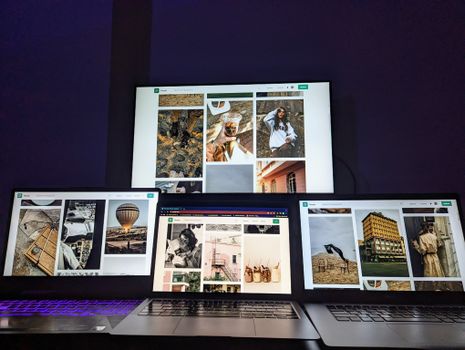
One practical buffer is to run work through a critique tool before it goes public, so that the obvious problems are found in private. Several services now do this. ArtHelper.ai offers art commentary from an AI trained on art history, theory and contemporary practices. ArtCritic asks you to upload artwork and returns mentor-style feedback across criteria such as composition, colour harmony and emotional impact, and it advertises its tone as unfiltered, unbiased and unapologetic. Global Art Critique combines AI and human experience to produce what it describes as figurative reviews. There is also an AI Art Critic app, built by an artist for artists, that turns sketches, photos and ideas into finished AI renders and 3D models in one place.
Feedback generation of this kind has limits, and they are worth naming. The blunt tone is a design choice rather than a mark of accuracy, and a model trained on art history is not your audience. What these tools give you is repetition: a way to hear a firm opinion many times over, in private, until the eventual public comment feels routine rather than personal. The same principle applies outside art. One source on using AI for written work makes the point that the tool can provide constructive feedback if you understand a little bit of the psychology behind how the feedback is framed.
Replying in public without feeding the thread
You do not owe anyone a reply, and there is no prize for the last word. When you do choose to respond, keep it short and specific. Acknowledge a point you accept, state a fact where something is incorrect, and stop. Do not write paragraphs defending the whole medium, and do not quote-post a hostile comment to your own audience unless you are prepared for the volume to go up rather than down.
Silence is also a legitimate response, and deleting a comment on your own page is not censorship of a public square. It is housekeeping. If you want to remove the guesswork, publish a short comment policy stating what you keep and what you remove, then apply it evenly.
When the criticism turns out to be right
Some of the harshest comments are correct. A model’s rendering can produce odd fingers, mismatched light sources and textures that fail at full size. If several people point at the same flaw, that is data, not an attack. Fix the file where you can, note the prompt change or the extra clean-up step for next time, and consider reposting the improved version with a brief note. Visible revision defuses a surprising amount of hostility, because it shows a working process rather than a finished claim.
Frequently Asked Questions
Should I reply to every negative comment about my AI art?
No. Reply only when there is a factual correction worth making or a craft point you want to acknowledge. Ethical objections to the medium are unlikely to be resolved in a comment thread, and bad faith comments are designed to keep you engaged. Choose selectively, respond briefly and leave the rest alone.
Is it cheating to run my own artwork through an AI critique tool?
Not at all. A critique tool is a rehearsal space, not a collaborator on the final piece. It gives you a firm opinion in private so that public comments feel less startling. Treat the output as a checklist of things to look at, and keep your own judgement as the final decision.
How do I tell the difference between criticism of AI art and criticism of me?
Look at what the comment actually addresses. If it names something visible in the image, such as hands, lighting or resolution, it is about the work. If it addresses the existence of AI tools, the training data debate or your right to call yourself an artist, it is about the medium, and you are simply standing where the argument landed.
Can I delete critical comments from my own portfolio page?
Yes. Your portfolio is your own space, not a public forum, and you are not obliged to host anything. Publish a short comment policy explaining what you keep and what you remove, apply it consistently, and keep the conversation about the work rather than about the commenters themselves.
What should I do if a comment raises copyright or legal concerns?
Take it seriously but do not debate law in a comment thread. Artists have raised real concerns about the legality of AI image generators, and the detail varies by situation. Note the point, keep a record, and check your position with a qualified professional or the relevant official source before responding publicly.