How AI Art Fits into the Broader Art Movement
Every few years a new tool arrives that appears to threaten the way art is made, and every few years the argument that follows turns out to be less about the tool than about who gets to call themselves an artist. AI image generation fits that pattern, but it also fits inside something larger: the contemporary art movement itself, which has spent decades absorbing new media, new materials and unfamiliar kinds of authorship. Placing AI art in that context makes the debate clearer, and it usually makes the work better too.
Why the AI Art Debate Sounds Like an Older Argument
The question of whether a machine can make art is often framed as unprecedented. It has company. Photography forced painters to reconsider what a made image was for. The readymade pushed the idea that an artist’s decision, rather than manual labour, could constitute the work. Video and installation art later moved the centre of gravity away from the single crafted object. AI image tools are another entry in that sequence, and the anxiety they provoke is familiar in shape even when the technology behind it is not.
That does not make the concerns trivial. It makes them negotiable, which is a different thing. Movements are not defined by unanimous agreement. They are defined by shared arguments, shared institutions and a shared sense that the questions matter enough to keep asking.
The Museum Test: What Institutions Are Already Showing
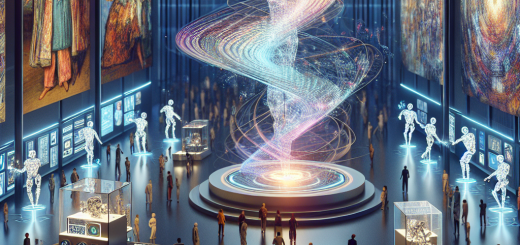
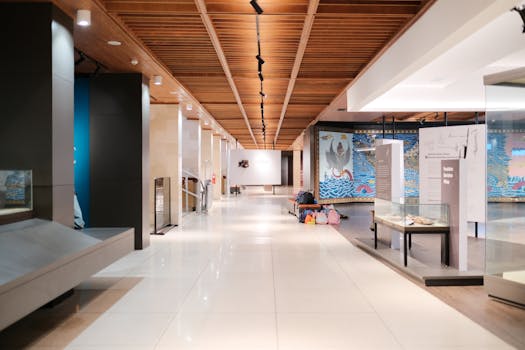
One reliable way to judge whether a form belongs to a movement is to watch what institutions do with it. The Mori Art Museum staged MACHINE LOVE: Video Game, AI and Contemporary Art from 13 February to 8 June 2025, treating the subject as a full exhibition rather than a novelty display. The museum describes itself as a contemporary art museum open to the world, where visitors can experience a diverse range of contemporary art from around the world. Placing AI work inside that programme signals inclusion rather than exception.
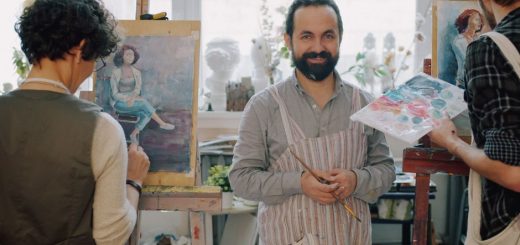
Smaller and more specific examples point the same way. An exhibition structured around the AVU workshops presented them as a place where craftsmanship, experimentation, new technologies and contemporary art converge. That framing matters. It puts machine tools on the same table as hand skills instead of opposite them, and it treats convergence, rather than replacement, as the interesting part of the story.

Machine Creativity and the Question of Authorship
Arthur I. Miller’s book The Artist in the Machine: The World of AI-Powered Creativity, published by the MIT Press, examines what happens to creative work when software takes part. In a 2020 review, A. Olszewska described the book’s aim as confirming that, as a consequence of AI developments, machine creativity does exhibit traits customarily assigned to humans. That is a strong claim, and it is the one many human artists instinctively push back against.
The pushback has a clear shape. A common argument holds that AI does not create art at all, that it imitates what human beings have already created and, in effect, rearranges countless existing fragments. Both positions can be held at once without contradiction. Output may look creative while the meaning, intention and judgement behind a finished piece still come from a person who decided to make it and chose what to keep.
Where Human Hands Still Lead
Some of the most interesting current practice is deliberately hybrid. One artist who left a banking career in London to work full time now hand-embroiders the same images he builds with custom-trained AI models. The model supplies the image; the needle supplies the labour, the time and the irreversibility. Neither half is decoration. The generated file becomes a template or a sketch, and the physical work becomes the finished object.
That pattern is a useful model for anyone working in this space. Treat generation as one stage in a longer process rather than the whole of it. Training, selecting, discarding, redrawing, printing, stitching and animating all remain decisions a person makes, and those decisions are what a viewer responds to in a gallery or on a screen.
Why the Panic Is About Labour, Not Only Technology
Daniel Tutt’s essay Freud, Aesthetics, and the Limits of “AI” argues that the contemporary panic around AI and creative labour is not driven by autonomous technological development. Read that alongside the museum programming and the hybrid studio practice, and the shape of the moment becomes clearer. What unsettles people is rarely the arrival of a new brush. It is the question of who is paid, who is credited, and whose existing work sits inside the training set.
Movement, Atmosphere and the Image That Breathes
AI is not only a way of producing still images. It is also used to bring an image to life, creating movement, atmosphere and a new way to experience the artwork. Static paintings can be extended into loops, textures can shift across a surface, and an installation can respond to data in real time. Refik Anadol’s AI data sculpture in Prague is a well-known example of that approach, where computation becomes the material and the room becomes part of the display.
It is a short step from there to public art, and to the reminder that not every significant contemporary work is machine-made. Ai Weiwei’s Mushrooms, commissioned for the Neil Balnaves Tallawoladah Lawn Commission at MCA Australia, comprises 500 cast-iron sculptures of combat helmets, transforming symbols of war into a call for peace. The authorship is entirely human, yet the work shares ground with AI art in the way it uses arrangement, scale and context to carry meaning. The similar name is a coincidence, and a fair reason to read carefully.
What AI Art Shares With Contemporary Practice
- New media is a normal category. Museums programme video games, moving image and AI work together rather than isolating them.
- Process is visible. Dataset notes, model versions and prompts increasingly sit alongside the finished piece, much as sketches once did.
- Authorship is distributed. Artist, tool, trainer and audience all contribute to what the work finally means.
- Institutions explain the technology. Curators interpret the method for visitors instead of hiding it behind the object.
- Criticism is vigorous. Being argued about seriously is one of the clearest signs that a form has been admitted to the conversation.
How to Place Your Own Work in the Conversation
If you work with generative tools, you can position the output as contemporary practice rather than a curiosity. Name the models and workflows you used, because transparency reads as confidence rather than apology. Show the human decisions: the rejected versions, the manual overpainting, the print tests, the pixel work, the animation pass. Group pieces by idea rather than by tool, so a viewer sees a body of thought rather than a demonstration of software.
It also helps to keep a written record of intent. A short statement describing what you were trying to say, and why a machine was the right means of saying it, does more for your work than any technical specification. Buyers and curators respond to purpose. If you sell through external platforms, check the current terms and policies directly with the platform before listing, since those conditions change and are not covered here.
Frequently Asked Questions
Is AI-generated art still art?
Most people working in contemporary art treat it as art if it functions as art, which means it is made with intent, shown to an audience and open to interpretation. That does not settle the authorship argument. A common position holds that AI imitates what humans have made and rearranges it, so the human intention behind a piece remains the part that carries meaning.
Why is AI art controversial?
The controversy is bound up with labour as much as with images. Daniel Tutt’s essay argues that the contemporary panic around AI and creative labour is not driven by autonomous technological development, which suggests the friction comes from economic and professional pressures. Questions about credit, payment and the use of existing work in training sets sit at the centre of the disagreement.
What is AI art actually called?
There is no single settled label. Writers and institutions tend to use descriptive phrases rather than one fixed term, and museum programming often groups the work with video games, moving image and digital practice instead of treating it as a separate genre. The naming is still in flux, which is normal for a form that is only beginning to be catalogued.
Where can I see AI art in a gallery?
One confirmed example is MACHINE LOVE: Video Game, AI and Contemporary Art at the Mori Art Museum, which ran from 13 February to 8 June 2025. Larger institutions now include AI and new media work within wider group exhibitions, so check current and upcoming exhibition listings directly with the museum before planning a visit.
Will AI replace traditional art forms?
Hybrid practice suggests not. The artist who left a London banking career now hand-embroiders the same images he builds with custom-trained AI models, which makes the physical work the finished object rather than the disposable part. Machine output tends to become a stage in a process, with human judgement, craft and context still deciding what the audience finally sees.