Future Art Mediums: What Comes After AI Art?
Artificial intelligence has reshaped how images are generated, but it has not settled the question of what artists will work with next. The medium of the future is the fusion of human creativity and digital possibility. That fusion is already taking shape across galleries, studios and screens, and it points beyond simple prompts towards something broader: a family of new media that combines computation, interaction, physical materials and human intention. Understanding this shift matters for artists, collectors and anyone curious about where creative expression is heading.
What Do We Mean by a Medium?
The term medium has always referred to the material an artist chooses. The Tate defines a medium as the substance used to make a work, such as a sculpture in bronze or marble, a painting in oil on canvas, or a drawing in watercolour on paper. These traditional definitions still matter because they remind us that artistic expression is tied to physical choices. A medium is not just a tool; it shapes how an idea looks, feels and survives over time.
As digital tools appear, the idea of a medium expands. Software, sensors, screens and algorithms become materials in their own right. The question of what comes after AI art is therefore not about abandoning materials. It is about understanding which materials will carry meaning for artists and audiences in the coming years, and how older materials might be reinterpreted in a technological age.
The Rise of New Media Art
AI image generation belongs to a wider category known as new media art. This category already includes virtual art, computer graphics, computer animation, digital art, interactive art, sound art, Internet art, video games, robotics and 3D printing. Each of these forms has its own history, techniques and audience, and each continues to develop independently of generative AI.
Seen in this context, AI art is not a complete break with the past. It is one branch of a longer evolution that began with the first experiments in computer graphics and continues through interactive installations and web-based projects. The next major medium may not be a single invention. It may be a new combination of these existing strands, brought together in ways that artists have only begun to test.
How AI Changed the Creative Process
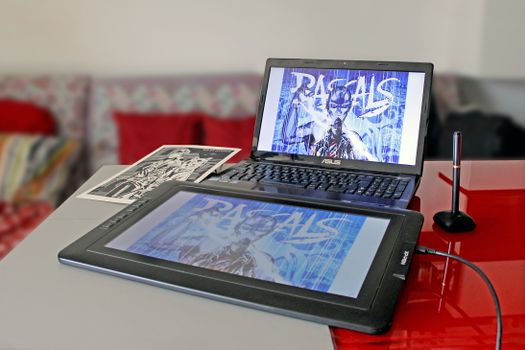
Before generative models became widely available, digital artists already worked with a stylus or mouse to draw directly into software such as Procreate, Photoshop, Clip Studio Paint or Krita. They built images in layers, blended colours and refined details in ways that were impossible with traditional paint alone. AI tools have added another layer to this process, allowing artists to generate base images, explore variations and iterate quickly.
Yet the creative process still depends on human judgement. An artist decides which prompt to write, which result to accept, which elements to keep and which to discard. The computer produces possibilities; the artist shapes them into meaning. That division of labour is likely to define many future art mediums, where software handles heavy computation and the artist provides direction, taste and intent.
Candidate Mediums for the Coming Years
Several mediums are emerging as strong candidates for what comes after AI art. None of them replaces human creativity. Instead, they offer new ways for that creativity to appear in physical and virtual spaces, often by bringing together tools that previously existed in separate worlds.
Holograms and Volumetric Displays
One vision of art in 2030 involves 6G holograms and AI curation transforming galleries while traditional oil painting gains new meaning. Holographic displays would allow artists to place three-dimensional images in a room without screens or headsets. Viewers could walk around a work, observe it from different angles and watch it change over time. This would extend the principles of sculpture and video into a medium that feels closer to light itself.
Interactive and Participatory Installations
Interactive art and Internet art are already established parts of new media art, and they are likely to grow in importance. Future installations may respond to the presence, movement or voice of the viewer. The tactile internet, a term from the 2030 predictions, suggests that remote audiences could eventually feel texture and resistance through connected devices. That would make participation a genuine medium, not just a novelty attached to an otherwise static piece.
Quiet, Meditative Spaces
Some predictions for the future of art suggest that artists may seek to create quiet, meditative spaces that help the viewer escape from information overload and digital media. This is a counterintuitive but plausible direction. As screens multiply and notifications intensify, the value of a calm, slow, physical encounter with art could rise. Artists might respond with minimal installations, natural materials and carefully controlled light and sound, offering a deliberate contrast to the speed of online culture.
Robotics and 3D Printing
Robotics and 3D printing are already part of the new media art family. A robotic arm can draw, sculpt or assemble materials over long periods, producing work that no human hand could create alone. 3D printing turns digital models into physical objects, bridging the gap between the screen and the gallery floor. These mediums allow artists to translate algorithmic designs into tangible form, and they are likely to become more accessible as the technology matures.
The Fusion of Human Creativity and Digital Possibility
In essence, the medium of the future is the fusion of human creativity and digital possibility. This phrase captures something important: the next medium will not be purely digital or purely manual. It will be hybrid. Artists will combine hand-drawn marks with generative output, physical materials with sensor data, and traditional craft with machine processes.
Evidence for this hybrid approach already exists across contemporary practice. Artists are redefining the term medium as they move between digital tools, physical fabrication and code. A single work might begin as a sketch on a tablet, pass through an AI model, become a 3D-printed object and then be painted by hand. Each stage adds a layer of meaning, and the boundaries between digital and physical become less important than the ideas the work carries.
What Happens to Traditional Mediums?
Traditional mediums will not disappear. Oil painting, watercolour, bronze and marble have survived every previous technological shift, from photography to video to the internet. According to the 2030 predictions, traditional oil painting gains new meaning as digital tools become routine. The hand-painted canvas may come to represent slowness, permanence and human touch in an environment dominated by ephemeral images.
Artists have always expressed themselves through a wide variety of disciplines and mediums, and that variety is unlikely to shrink. The future will probably contain a wider range of options, not a narrower one. Emerging artists and working professionals alike can choose between pixel-based software, physical fabrication, interactive systems and traditional materials, often within the same project.
Frequently Asked Questions
What is new media art?
New media art is a broad category that includes virtual art, computer graphics, computer animation, digital art, interactive art, sound art, Internet art, video games, robotics and 3D printing. AI-generated art belongs within this family. New media art is defined by the use of digital or electronic technologies as central materials rather than as incidental tools, and it continues to expand as new technologies appear.
Will AI art replace traditional mediums?
Most predictions suggest that traditional mediums will gain new meaning rather than disappear. Oil painting, watercolour and sculpture have survived previous technological shifts and continue to attract artists and collectors. The likely future is a hybrid one, where AI tools sit alongside traditional craft and both influence each other within individual works.
What will galleries look like in 2030?
According to one forecast, galleries in 2030 will be transformed by 6G holograms, AI curation and the tactile internet, while traditional oil painting acquires a fresh significance. Visitors may encounter holographic displays, responsive installations and remote tactile experiences alongside more conventional canvases. The gallery becomes a mixed environment where old and new mediums coexist rather than compete.
Is digital art a good medium for beginners?
Digital art is accessible because it allows artists to work in layers, undo mistakes and experiment without buying large quantities of materials. Software such as Procreate, Photoshop, Clip Studio Paint and Krita offers a range of options for drawing and painting with a stylus or mouse. As with any medium, progress depends on practice and patience, but the low cost of correction makes it an inviting starting point.