What Comes After AI Art? Future Art Mediums to Watch
AI-generated art has transformed the way people think about creativity. In a few short years, machine-learning tools have moved from obscure experiments to everyday studio companions. Yet the art world does not settle easily, and the question of what comes after AI art is already being asked by artists, critics and collectors alike. The answer is unlikely to be a single new medium that replaces everything before it. The evidence points instead to a more expansive future, where hybrid methods, interactive technologies and even deliberate simplicity coexist.
When people ask what the future’s medium in art will be, they often expect one clear answer. The reality is more complex. The term “medium” itself is being redefined, and the next era of art may be defined less by materials and more by methods, relationships and experiences. Understanding where art is heading requires a closer look at how the word “medium” has already changed.
How the Meaning of “Medium” Has Changed
The Tate notes that “medium” has two principal overlapping meanings in art. It can refer to the type of art, such as painting, sculpture or printmaking, and it can also refer to the materials an artwork is made from. A painting might be created in oil on canvas or watercolour on paper, while a sculpture might be cast in bronze or carved from marble. These definitions have served artists for centuries, but they are now being stretched in new directions.
The history of art is a history of expanding mediums. From early cave pigments and ancient murals to oil paint, photography and video art, each era has broadened what artists could express. The definition of an artistic medium has never been fixed, and today it is more fluid than ever. In the era of AI, digital tools and hybrid practices, the idea of a medium is undergoing its most significant transformation yet, driven by technology, interactivity and a new fluidity in how artists create.
New Media Art: The Broader Digital Canvas
Discussions about AI often dominate conversations around digital creativity, but AI is only part of a much larger picture. New media art is an established field that comprises virtual art, computer graphics, computer animation, digital art, interactive art, sound art, Internet art, video games, robotics and 3D printing. Each of these forms has its own history, techniques and conceptual questions, and most existed long before generative AI became widely available.
This broader view matters because it reframes the future of art. Video games are already treated as a serious artistic medium. Robotics and 3D printing have expanded sculpture and installation practice in ways that would be impossible with traditional materials. Sound art has given galleries new ways to occupy space and time. For artists who have worked with AI and want to move beyond it, these adjacent fields offer rich territory to explore, often with more established critical conversations than AI art itself.
These mediums also change the relationship between the viewer and the work. Interactive art invites participation, sound art fills a room with time-based experience, and video games ask audiences to act rather than simply observe. The shift from passive viewing to active engagement is one of the clearest signs that the future of art will not look like the past.
Hybrid Practices: When Traditional Meets Algorithmic
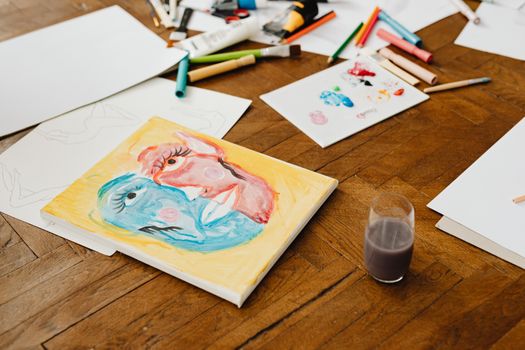
One of the most significant trends of the current moment is the blending of traditional and digital methods. An artist who once worked solely in acrylic may now integrate machine-learning algorithms, 3D modelling or data visualisation into their practice. The result is a new kind of artwork that resists easy classification as painting, sculpture or digital art.
Mixed media has long been recommended as a way for artists to add depth to an existing style. The modern version of this idea is far more ambitious. An artist can begin with brushwork and finish with algorithmically generated patterns. A sculpture can be designed in 3D software, produced with a 3D printer and then finished by hand. Data visualisation can turn statistics into painterly compositions. These hybrid practices suggest that the future of art lies not in choosing between old and new mediums, but in combining them in ways that serve the concept behind the work.
The most successful hybrid works tend to be those where the technology serves the idea rather than the other way around. A machine-learning algorithm is another mark-making tool, in the same way that a brush or a chisel is a tool. What matters is what the artist chooses to do with it.
The Counter-Trend: Quiet and Meditative Spaces
Not every prediction about the future of art involves more technology. In fact, some artists are moving in the opposite direction. In the future, artists may seek to create quiet, meditative spaces that help the viewer escape from information overload and digital media. The idea has growing appeal in a world where attention is constantly pulled towards screens, notifications and endless content.
These meditative spaces might take the form of minimal installations, rooms designed for slow looking, or works that use simple materials to create a sense of stillness and calm. The trend is not necessarily anti-technology. It can be seen as a response to the very digital abundance that AI art represents. As digital media becomes louder and more pervasive, art that offers silence becomes more precious. This is not a rejection of new mediums but a reminder that context and experience are part of what makes a medium meaningful.
Looking to 2030: Holograms, Tactile Internet and AI Curation
Longer-term projections for the future of art offer a glimpse of what may arrive by 2030. One vision includes 6G holograms, AI curation and the tactile internet transforming galleries, while traditional oil painting gains new meaning. The tactile internet refers to technology that enables remote touch and physical interaction, which could change how audiences engage with sculpture, installation and performance. AI curation may reshape how galleries select and present work, potentially opening the doors to a wider range of artists and styles.
Perhaps the most striking element of this vision is that traditional mediums do not disappear. Traditional oil painting gains new meaning when it is shown alongside holographic displays and interactive installations. The same principle extends to other established forms. In a future dominated by digital and virtual experiences, the physical and the handmade become more distinctive, not less relevant. Galleries are part of this transformation too, as the way art is displayed, curated and experienced online continues to change alongside the mediums themselves.
What the Changing Medium Means for Artists
For working artists, the changing meaning of medium is both liberating and demanding. An artist is no longer defined by a single material or method. The tools available span centuries of tradition and the latest developments in computing. The challenge is to use them with intention, rather than chasing every new technology for its own sake.
The question of what will be the future’s medium in art remains open, and it may never have a single answer. What seems certain is that the definition of an artistic medium will continue to evolve. Artists who treat medium as a flexible, expressive choice rather than a fixed identity will be best placed to contribute to that evolution. Collectors and audiences, meanwhile, will need to become comfortable with works that are hybrid, interactive and harder to classify than anything that came before.
Frequently Asked Questions
Will AI art replace traditional art mediums?
Nothing in the available evidence suggests that traditional mediums will vanish. Projections for 2030 indicate that traditional oil painting will gain new meaning as digital media becomes more common, rather than being replaced by it. The more likely future is a hybrid one, in which artists combine machine-learning algorithms and 3D modelling with painting and sculpture to produce works that neither approach could achieve alone.
What is included in new media art?
New media art is a broad category that includes virtual art, computer graphics, computer animation, digital art, interactive art, sound art, Internet art, video games, robotics and 3D printing. These forms have their own histories and methods, and many predate the recent wave of AI-generated imagery. New media art continues to develop as technology changes, making it one of the most dynamic areas of contemporary creative practice.
Why are quiet and meditative art spaces becoming important?
As digital media contributes to information overload, some artists are creating calm environments that allow viewers to step away from screens and constant stimulation. These spaces can use minimal design, simple materials or intentional stillness to encourage reflection. The trend does not reject technology outright; instead, it uses art as a counterbalance to a world saturated with digital content and fast-paced visual noise.
How can artists prepare for the future of art mediums?
Artists can prepare by regarding the medium as a flexible creative choice rather than a permanent label. Combining traditional materials with machine-learning algorithms, 3D modelling, data visualisation or interactive technology opens up new possibilities. Mixed media approaches allow an existing style to grow in unexpected directions. Staying curious about both new tools and the traditional methods they can be combined with is the strongest preparation.