
Mystery Subgenre Selection for Every Reading Mood
A body in the rose garden. A sealed letter in an ancestral library. A stranger arriving in a rain-swept village with far too many questions. Mystery subgenre selection begins with that first delicious feeling: what kind of secret do you want waiting on the next page? The right mystery is not simply about the crime. It is about the atmosphere you want to inhabit, the sleuth you want to trust, and the kind of final reveal that will keep you turning pages past bedtime.
Mystery Subgenre Selection Starts With the Feeling
Readers often choose a mystery by premise alone, then discover that the book’s pace or tone is not quite right for the moment. A clever locked-room puzzle can be irresistible, but perhaps what you really need is the comfort of a familiar village. A coastal disappearance may sound cozy until the danger tightens and the story becomes a tense, shadowy chase.
Start with the experience you want. Do you want to be charmed, unsettled, transported, or challenged? There is no wrong answer, and your favorite answer may change from one reading week to the next. A mystery shelf works best when it has room for both the gentle pleasure of a village case and the chill of a long-buried scandal.
Choose cozy mysteries for wit, warmth, and close-knit secrets
Cozy mysteries offer the satisfying click of clues coming together without requiring you to live in a state of dread. The crime may be serious, but the reading experience is often welcoming: a distinctive town, an amateur investigator with a practical reason to ask questions, and a community where everyone knows a little too much about everyone else.
Choose a cozy when you want cleverness with a lighter touch. These books are ideal for readers who enjoy quirky suspects, local rivalries, family history, and a solution that restores a sense of order. The stakes can still feel personal, especially when the victim, suspect, and sleuth all share the same small world. Expect secrets behind tidy hedges, suspicious inheritances, and motives hiding beneath polite conversation.
Choose historical mysteries for a past that will not stay buried
Historical mysteries offer two puzzles at once: who committed the crime, and what pressures does the era place on everyone involved? A grand estate, a wartime street, or a remote country house can make every social rule and every withheld fact matter more.
This subgenre suits readers who want setting to carry as much weight as plot. The strongest historical mysteries do not treat the past as costume. They let customs, class, technology, and reputation shape what the investigator can discover and what the culprit can conceal. Choose one when you want to wander old halls, listen for footsteps beyond a locked door, and uncover a truth with roots far deeper than the present crime.
Choose amateur-sleuth stories for personal stakes
An amateur sleuth does not need a badge to notice what others miss. They may be a neighbor, bookseller, artist, local historian, or newcomer who realizes the official explanation leaves one crucial detail unresolved. Their lack of formal authority often creates the fun. They must earn confidences, follow intuition, and risk looking foolish before the case begins to make sense.
Pick this style when you enjoy investigation with a human center. The sleuth usually has something to lose: a friendship, a family legacy, a beloved community, or their own hard-won peace. That personal connection can make even a classic whodunit feel immediate. You are not only asking who did it. You are asking whether the sleuth can face what the answer changes.
Choose atmospheric suspense when the setting feels watchful
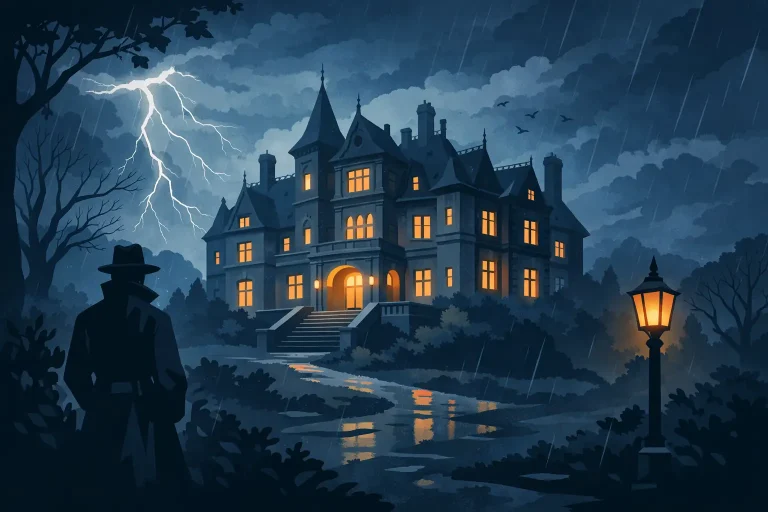
Atmospheric suspense is for nights when you want the walls to seem a little closer. Here, mood matters as much as evidence. A lonely shoreline, an elegant but decaying house, a village with an old grievance, or a storm that cuts off the road can turn every encounter into a question.
These mysteries often move with a gathering sense of unease rather than nonstop action. The trade-off is worth knowing: if you want a brisk, clue-by-clue race, a deeply atmospheric book may feel slower at first. But if you enjoy tension that accumulates in half-truths, strange silences, and the sense that someone is protecting an old secret, this is where the shadows grow richest.
Choose character-driven whodunits for motives with depth
A character-driven whodunit asks you to pay close attention to people, not only alibis. The suspects may each have a convincing reason to lie. The investigator may carry private grief or a complicated history that colors every decision. The final solution matters because it reveals something true about the people involved.
This is an excellent choice when you want emotional texture alongside fair-play clues. The best examples give you enough evidence to form theories, then make you rethink each relationship as the hidden pattern emerges. The answer should feel surprising, but not random. Once the truth is exposed, the earlier moments should sharpen into focus.
Let Your Reading Habits Narrow the Field
Your ideal subgenre also depends on how you read. If you steal twenty minutes before sleep, a cozy or a neatly structured whodunit can be wonderfully easy to return to. If you prefer sinking into a book over a long weekend, a historical mystery or layered suspense novel may reward the extra time it takes to absorb the setting and tangled history.
Series preference matters, too. Readers who love returning to familiar faces may gravitate toward cozy and amateur-sleuth series, where the setting becomes almost as beloved as the detective. Readers who enjoy a fresh cast and a self-contained secret may prefer stand-alone historical puzzles or atmospheric suspense. Neither approach is better. One offers the pleasure of returning home; the other opens a new locked door every time.
Consider your tolerance for darkness honestly. A mystery can be absorbing without being grim, and a lighter mystery can still have sharp plotting and real emotional stakes. If you prefer the comfort of a satisfying resolution without lingering menace, start cozy. If you want danger closer to the page, choose suspense. If you want a balance, look for a whodunit where the puzzle stays central while the characters bring the tension.
When One Mystery Subgenre Is Not Enough
The most memorable books often borrow from more than one tradition. A cozy mystery can contain a historical secret. An amateur sleuth can investigate a case in a richly atmospheric seaside town. A character-focused whodunit can unfold inside an estate full of old portraits, older grudges, and one very inconvenient inheritance.
That overlap is not a problem for mystery subgenre selection. It is often the clue that points you toward your next favorite read. Instead of asking for only one label, combine the elements that matter most. You might want a cozy mystery with a coastal setting, a historical puzzle with an amateur investigator, or suspense that delivers a clean, satisfying solution rather than an open-ended chill.
The Mystery Collective is built for this kind of reading appetite: different authorial voices, multiple series, and plenty of routes into secrets, clues, and carefully concealed motives. You can follow the mood you already know you love or try a neighboring subgenre without leaving the pleasures that brought you to mysteries in the first place.
Pick the Book That Calls to You
A good selection process should not feel like homework. Read the premise, notice the setting, and trust the detail that catches your attention. Perhaps it is a village name that feels familiar before you have even visited it. Perhaps it is a locked room, a family fortune, an unreliable witness, or a detective who seems unable to let a small inconsistency go.
Then give the book enough pages to establish its particular rhythm. Some mysteries begin with a jolt; others lay the table carefully, introducing the people who will soon have everything to hide. The right choice is the one that makes you pause at the end of a chapter and think, just one more clue. Somewhere ahead, behind a closed door or beneath a perfectly ordinary conversation, the truth is waiting.