The Future of Digital Creativity in 2026 and Beyond
Digital creativity has grown from a specialist interest into a defining feature of contemporary culture. At its core, digital creativity involves using digital tools and technologies to explore creative ideas, apply different approaches, and find new ways of producing art, writing, music and design. As 2026 approaches, the pace of change is accelerating, driven largely by artificial intelligence, immersive technologies and new forms of digital production. For artists, writers and designers, understanding these shifts is no longer optional. The tools that shape creative work are changing, and so is the cultural context in which that work is shared and experienced.
This article looks at the trends shaping the future of digital creativity, drawing on industry commentary, academic research and practical guides to help creators make sense of what lies ahead.
The Rise of AI-Enhanced Creativity
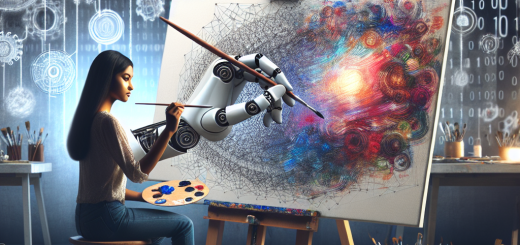
Artificial intelligence has moved from being a futuristic buzzword to a practical tool for creative professionals. AI-driven platforms now assist with content generation, and industry observers tracking creative talent have identified the rise of AI-enhanced creativity as one of the defining trends shaping the sector. The technology has become accessible enough that individual artists can integrate it into everyday practice, rather than treating it as an experimental novelty.
The philosopher and writer Julian Baggini put the matter plainly in early 2025: AI is going to be writing music, composing novels and creating artwork, and we will just have to get used to it. That statement captures both the promise and the discomfort of the current moment. Machine learning systems can already generate images, draft text and compose sound in ways that are difficult to distinguish from human output. For working artists, this raises practical questions about originality, authorship and the value of human skill.
Academic research is beginning to catch up with these developments. A study published in the journal AI and Ethics in June 2025 examined the relationship between artificial intelligence and its transformative impact on the creative industries, looking specifically at how digital media production is being redefined. The study frames AI’s influence as transformative, with implications for how creative work is conceived, produced and delivered. That shift brings benefits in speed and scale, but it also demands new critical thinking about what creativity means when machines can generate content on demand.
Immersive Storytelling Through AR and VR
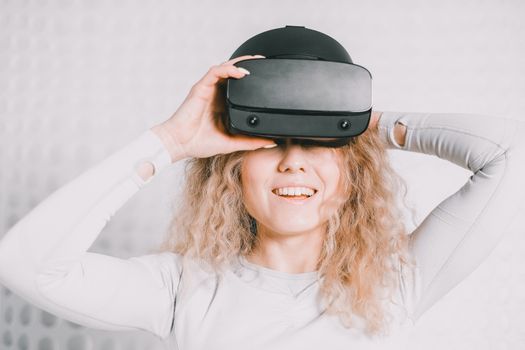
Alongside artificial intelligence, augmented reality and virtual reality are emerging as powerful mediums for creative expression. The British Council has noted that emerging mediums such as augmented and virtual realities, 3D printing and artificial intelligence allow artists to create in novel and innovative ways. These technologies are not simply new delivery formats. They change the relationship between the creator, the artwork and the audience.
Immersive storytelling through AR and VR is one of the most visible trends in the digital creative industry. In virtual reality, audiences can step inside a painting, walk through a film set or experience a story from a first-person perspective. In augmented reality, digital elements are layered onto the physical world, allowing artists to transform public spaces, gallery walls and everyday objects into interactive canvases. For storytellers, these tools open up narrative possibilities that linear media cannot match.
The creative possibilities extend beyond screens. Three-dimensional printing allows designers and sculptors to translate digital models into physical objects, blurring the line between the virtual and the material. When combined with AI-driven generation, immersive environments and physical fabrication, creators have access to a toolkit that would have seemed impossible only a decade ago. The challenge for artists is learning how to use these tools with intention rather than novelty.
The Changing Creative Industries
Digital media has evolved into a critical tool for connecting, engaging and inspiring audiences. The birth of the web, roughly three decades ago, triggered an explosion of new ways of creating, disseminating and experiencing art. Traditional industries such as publishing and music have been transformed by digital distribution, and similar pressures are now reshaping visual art, film, gaming and design.
One of the most significant consequences of this shift is the democratisation of creative production. Digital tools lower the barrier to entry, allowing independent artists to reach global audiences without the support of large institutions. At the same time, the sheer volume of digital content makes it harder to stand out. Creative professionals are expected not only to produce original work but also to understand the platforms, algorithms and audience behaviours that determine whether that work is seen.
Industry recognition is also evolving. Awards programmes and professional bodies that celebrate creative excellence now routinely feature work produced with AI assistance and immersive technologies. The criteria for what counts as innovative work are being rewritten as the tools available to creators expand. For the wider culture, this means that the way we define art, authorship and creativity is itself being renegotiated.
Artificial Creativity and Human Freedom
Not all commentary on the future of creativity is celebratory. The German author Nina George wrote in January 2026 that as AI’s reach expands into ever farther corners of our lives, we risk losing our freedom and ability to create. Her argument centres on the idea that what distinguishes humans from artificial intelligence is the ability to create. If that capacity is outsourced to machines, something essential to human identity may be diminished.
This philosophical tension is at the heart of current debates about artificial creativity. An edited collection of papers from the Artificial Creativity: Looking at the Future of Digital Culture meeting brings together researchers exploring these questions from multiple angles. The book examines how machine learning, generative systems and algorithmic processes are changing our understanding of creative work, and what it means to be human in a culture that increasingly delegates imagination to software.
There is no simple resolution to these questions. Machines can generate content, but they do not experience the world, and they do not create out of need, memory or desire. Human creativity remains rooted in lived experience, in the struggle to express something that matters. The future of digital creativity will depend on how well artists can hold on to that human core while making use of the powerful new tools at their disposal.
Preparing for the Future of Creative Work
For individual creators, the practical question is how to prepare for a future in which AI, AR and VR play an increasingly prominent role. The University of York’s Digital Creativity practical guide defines the field in straightforward terms: digital creativity is about using digital tools and technologies to explore creative ideas, apply different approaches, and find new ways of doing things. The emphasis on exploration and experimentation is telling. The skills that matter most are not tied to any single piece of software but to the ability to adapt.
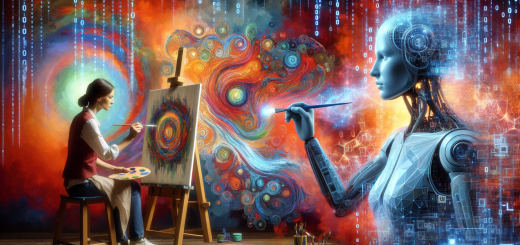
Research from the digit.ac.uk project explores how humans perform in design creativity tasks such as problem clarification and idea generation, and compares those performances with AI systems. Early findings suggest that human strengths lie in framing problems and generating ideas that are grounded in context and meaning, while AI excels at speed and variation. The most effective creative workflows are likely to combine both, with humans setting direction and machines expanding the range of possibilities.
Creators who want to stay relevant should treat new tools as extensions of their practice rather than replacements for it. Experimentation with AI-driven platforms, immersive storytelling and emerging mediums can reveal unexpected possibilities. At the same time, the skills of observation, judgement and empathy that underpin all creative work remain as important as ever. Technology changes the tools, but the human capacity to imagine remains the foundation of digital creativity and its future.
Frequently Asked Questions
Will AI replace digital artists?
The sources point to transformation rather than replacement. AI now assists with content generation and can produce music, novels and artwork, but research suggests humans retain strengths in problem clarification and idea generation. Digital artists who learn to work alongside AI tools are likely to find new creative opportunities, while the human role in setting direction and meaning remains essential.
Will AI replace creativity?
Creativity is widely understood as a distinctly human capacity. Nina George argues that the ability to create is what distinguishes humans from AI, while warning that expanding AI use risks reducing our freedom to create. The likely future is a partnership in which AI handles generation and variation, while humans provide intention, context and emotional depth.
How can digital creators adapt to AI, AR and VR?
Digital creativity is fundamentally about using digital tools to explore ideas and find new approaches. Creators can experiment with AI-driven platforms for content generation, explore immersive storytelling through AR and VR, and consider physical fabrication through 3D printing. Practical experience, guided by a willingness to learn, remains the most reliable path to adapting successfully.