The Creative Process with AI: From Prompt to Finished Piece
Artificial intelligence has moved from the edges of digital art into the centre of many studio workflows. For artists, designers and illustrators, the question is no longer whether AI belongs in the creative process, but how to use it well. From the first prompt to the finished piece, AI can change how ideas form, how they develop and how they reach an audience. For a UK-based graphic artist working across AI-generated artwork and pixel art, the technology has become another set of brushes, another set of tools, and another way to see what is possible.
What AI Brings to the Creative Process
AI can analyse vast amounts of data and generate unique concepts in a fraction of the time a human would need. Algorithms can create abstract patterns, morph images or generate entirely new visual directions, all from a short text prompt. For the working artist, this expands the range of options available at the very start of a project. Instead of committing to one idea early, the creator can explore a wide field of possibilities and then narrow the focus.
Exploring New Territory
Artists can experiment with novel forms and techniques that would have been difficult or impossible to achieve with traditional tools. Prompting allows for rapid iteration, so a creator can test many visual ideas before committing to one. The machine offers the raw material; the artist decides what is worth keeping. This is where AI feels less like automation and more like collaboration, with the technology offering surprises that the artist can refine into something coherent.
Working Across Media
One of the more striking benefits is the ease with which artists can now move between media. A single concept can be explored as text, image, video or spatial design without restarting the process from scratch. This cross-media flexibility keeps ideas moving and helps creatives stay in a state of flow. When an idea does not work in one format, it can be translated into another rather than discarded, which means fewer good ideas are lost along the way.
A Practical Workflow: From Prompt to Finished Piece
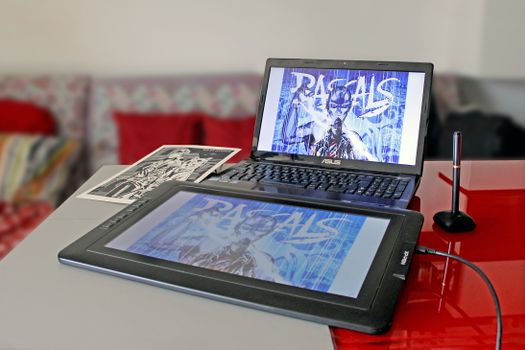
A fully generative workflow is no longer theoretical. Tomasz Opasinski, a designer with more than 20 years of experience in the entertainment advertising industry, documented what happened when he turned to a completely generative approach for a poster design. He found that incorporating AI streamlined his ideation, client approval and production phases, provided a fresh perspective and shortened the time from concept to completion. His experience offers a useful model for how the creative process with AI can work in practice.
Developing Ideas
The creative process often begins with developing ideas, and this is where AI is most obviously useful. By generating rapid variations on a theme, AI can support what researchers describe as exploratory creativity, helping creators break free from conventional thinking and explore new possibilities. The speed of generation matters. It lets the artist cover ground quickly, test wild directions without risk and find unexpected starting points that might never have emerged from a blank page alone.
Research
Research is another stage where AI can contribute to the creative process. Artists can use AI tools to gather visual references, analyse stylistic patterns and understand the context of their chosen genre. This stage benefits from the same data-processing ability that makes AI useful elsewhere, allowing the artist to spend less time searching and more time making. The results are not always perfect, but they provide a foundation that can be built on with the artist’s own knowledge and judgement.
Sketching and Drafting
Sketching and drafting have traditionally been the most labour-intensive parts of the creative process. With AI, the artist can generate a first draft from a prompt and then refine it. The output is not the finished piece, but a starting point that can be corrected, combined and improved. Many artists find this removes the intimidation of the blank canvas. The first mark is made by the machine, and the human then takes over, shaping the image until it carries the intended meaning.
Production and Client Approval
During production, AI’s ability to produce multiple iterations quickly is a clear advantage. Clients can compare options side by side, and the approval process becomes faster and more collaborative. When adjustments are needed, new variations can be generated in minutes rather than days. This is the phase where time savings are most obvious, especially for commercial artists who work to deadlines and depend on smooth client relationships.
The Human Element in AI Art
It is tempting to think of AI as a replacement for the artist, but the research tells a more complicated story. Studies on creativity and AI suggest that these tools are often used by people who do not have high creative self-efficacy, who do not place a high value on creativity and who struggle to regulate emotions such as anxiety and frustration. In other words, AI can lower the barrier to creative work for people who might otherwise feel blocked or discouraged.
Who Benefits Most from AI Tools
For someone who doubts their creative ability, AI can be an encouraging collaborator. It offers a way to produce visual work without requiring years of technical training. But this does not mean the artist disappears. The artist still chooses the prompts, evaluates the results and decides when a piece is finished. The technology provides confidence and momentum, while the human provides direction and taste.
The Value of Creative Confidence
For established artists, the value of AI lies elsewhere. They bring a strong sense of direction and a developed eye, and AI becomes a way to speed up exploration. The tool does not replace judgement; it amplifies it. Artists with high creative confidence tend to treat AI as a junior collaborator whose output still needs a firm editorial hand. The relationship between artist and machine works best when the human is clearly in charge of the final result.
Challenges and Considerations
Alongside the opportunities, AI introduces real challenges for creative professionals. These range from philosophical questions about authorship to practical concerns about the market and the future of creative work. Artists who adopt AI need to be aware of these issues, not to discourage themselves, but to make informed decisions about how they work.
Is AI a Threat to Human Creativity?
Some researchers argue that as AI becomes increasingly advanced, its capacity for creative output might eclipse human counterparts and, in doing so, render human creativity irrelevant. This is a sobering thought for artists who have spent years developing their craft. However, the same body of research suggests that AI can also facilitate exploratory creativity, enabling creators to break free from conventional thinking. The outcome may depend on how consciously the tools are integrated into artistic practice.
The Commercial Side of AI Art
Artificial intelligence is already being used to generate paintings, images and even sculptures, some of which have sold for thousands of dollars. This demonstrates a genuine market for AI-assisted work. For artists, the challenge is to find a position in that market, whether by selling original AI-generated pieces, creating hybrid work that combines AI with traditional techniques or offering something that machines cannot replicate. Online platforms now host artists who sell original AI-generated and pixel art digital pieces, and buyers are clearly interested.
Keeping the Artist in Control
The creative process with AI works best when the artist remains in control. The technology accelerates the journey from prompt to finished piece, but it does not decide what the piece means. The artist’s eye, taste and judgement are still the most important elements. A prompt is only a starting point, and the finished work is shaped by the decisions made after the image appears on screen.
The Future of Creativity with AI
The rise of AI art has been described both as the end of creativity and as the start of a new movement. The truth probably sits somewhere between the two. AI is amplifying human creativity rather than simply replacing it. It keeps ideas moving, helps creatives stay in a state of flow and makes it easier to work across media, all of which are practical benefits that fit into existing workflows.
A New Movement in Art
The debate around AI art is not going away, and neither is the art itself. AI-generated paintings, images and sculptures have found an audience, and some pieces have commanded significant prices. For the individual artist, this means there is space to experiment, to define a personal style and to contribute to a movement that is still taking shape. The creative process with AI is young, and its best work may not have been made yet.
Frequently Asked Questions
Here are answers to common questions about working with AI in creative projects.
How does AI affect the creative process?
AI affects the creative process by streamlining the ideation, client approval and production phases of a project. It shortens the time from concept to completion and provides a fresh perspective. It also helps artists experiment with novel forms and work across media, including text, image, video and spatial design. Many creatives find it helps them stay in a state of flow rather than getting stuck.
Does AI threaten human creativity?
Some researchers worry that advanced AI could eventually produce creative output that makes human creativity seem less relevant, a concern raised by commentators on the ethics of AI. Other studies, however, suggest AI supports exploratory creativity by helping people break free from conventional thinking. The threat is not inevitable. Much depends on how artists choose to use the tools and how much control they keep over the final work.
Can AI-generated artwork be sold?
Yes. Artificial intelligence is already being used to generate paintings, images and sculptures, and some of these pieces have sold for thousands of dollars. Artists can offer original AI-generated work through online galleries and marketplaces, and some platforms host artists who sell AI-assisted digital pieces alongside more traditional work. Buyers are clearly interested, even as debates about originality and authorship continue.