AI Artistry: Where Technology Meets Imagination
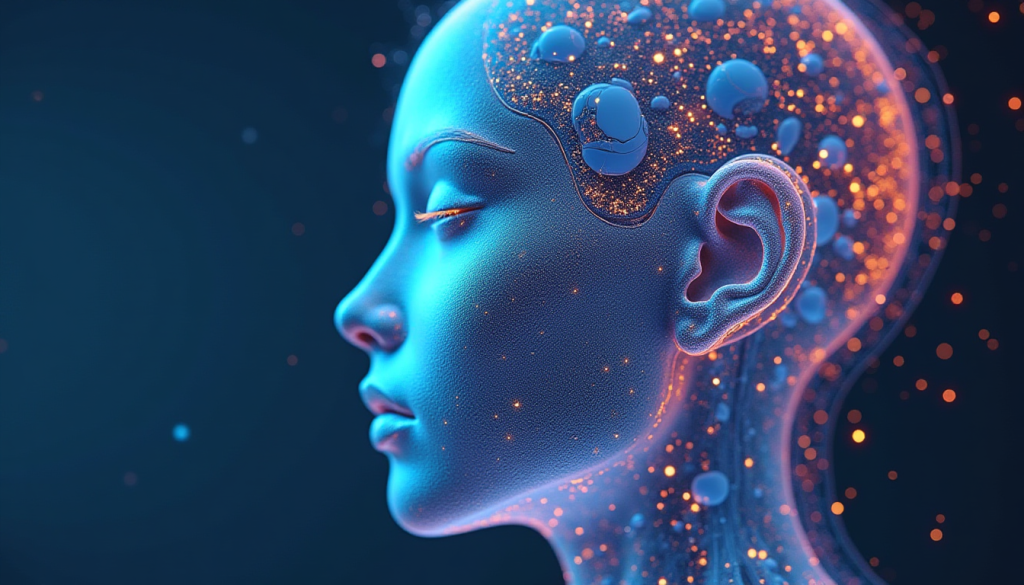
In the grand tapestry of human history, art has always been the mirror we hold up to our souls. From the charcoal sketches on cave walls to the oil-painted masterpieces of the Renaissance, every era has been defined by its tools. Today, we find ourselves at the threshold of a new epoch—one where the brush is made of code and the canvas is an infinite sea of data. This is the world of AI Artistry, a vibrant intersection where the cold precision of technology meets the boundless warmth of human imagination.
The Dawn of a Digital Renaissance
To understand where we are, we must look at how we arrived. While it feels like AI art exploded onto our screens overnight with the likes of DALL-E, Midjourney, and Stable Diffusion, the seeds were sown decades ago. In the 1970s, pioneer Harold Cohen created AARON, a computer program designed to paint autonomously. It was a rule-based system, following instructions like a diligent apprentice.
Fast forward to the 2020s, and the “apprentice” has learned to dream. Modern AI doesn’t just follow rules; it recognizes patterns, textures, and emotions within millions of images.4 When you type a prompt like “a Victorian astronaut exploring a neon jungle,” the AI isn’t simply searching a database. It is synthesizing concepts, blending the historical with the futuristic to create something that has never existed before.
The Artist and the Algorithm: A New Partnership
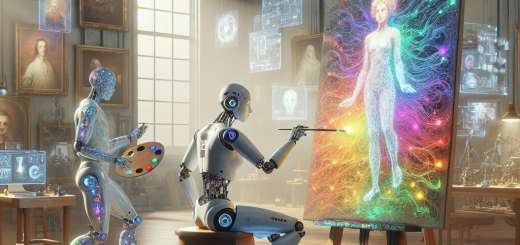
One of the most common fears is that AI will replace the artist. However, if we look closer, we see a different story unfolding: the story of co-creativity.
Think of AI not as a competitor, but as a hyper-capable collaborator. Professional artists are using these tools to:
- Rapidly Prototype: Instead of spending days sketching a concept, an artist can generate twenty variations in minutes to find the “spark.”
- Break Creative Blocks: AI can suggest color palettes or compositions that a human mind might never have considered.
- Scale Ambition: Digital artists like Refik Anadol use vast datasets to create immersive installations that turn architectural spaces into living, breathing poems.
In this partnership, the human remains the “Director.” The machine provides the “Performance,” but the vision, the emotional intent, and the final “Yes” belong to the person behind the screen.
Democratizing Creativity
Perhaps the most beautiful aspect of AI artistry is its accessibility. For a long time, the world of art had high “barriers to entry”—years of technical training, expensive supplies, or the luck of being born with a steady hand.
AI is the great equalizer. It allows the storyteller who can’t draw, the musician who can’t read sheet music, and the visionary with a disability to manifest their internal worlds. When technology handles the technical execution, the focus shifts to the Idea. In 2026, we are seeing a surge of “citizen artists” who are bringing fresh, diverse perspectives to the global stage simply because they finally have a way to speak.
Navigating the Ethical Landscape
Of course, no great revolution comes without growing pains. The rise of AI art has sparked vital conversations about:
- Copyright and Consent: Many AI models were trained on datasets containing copyrighted work without the original artists’ permission. This has led to landmark legal battles in 2025 and 2026 as we redefine what “Fair Use” looks like in the age of machine learning.
- The “Human Touch”: Is a piece of art still “art” if a machine generated the pixels? Many argue that art requires the “imperfections born from experience”—the grief, joy, and lived history that a line of code can’t truly feel.Job Displacement: While AI opens doors for many, it also disrupts traditional roles in graphic design, concept art, and stock photography.
These are not just technical problems; they are human ones. As we move forward, the goal is to build a “Pro-Artist” future—one where creators are compensated for their data and where AI is used to empower, not exploit.
Looking Ahead: The Future of the Canvas
As we look toward the horizon, the boundaries between mediums will continue to blur. We aren’t just talking about static images anymore. We are entering an era of:
Generative Video and Audio: Creating entire cinematic experiences from a single paragraph.
- Interactive Art: AR (Augmented Reality) murals that change based on the viewer’s mood or the time of day.
- Personalized Media: Stories and visuals that adapt specifically to the individual watching them.
Conclusion: The Heart in the Machine
AI Artistry is not the end of human creativity; it is a massive expansion of it. Technology provides us with a more powerful telescope, but we are still the ones choosing which star to look at.
The most exciting masterpieces of the next decade won’t be made by humans alone, nor by machines alone. They will be born from the synthesis of both—a beautiful, messy, and inspired collaboration where technology meets imagination to show us parts of ourselves we haven’t yet discovered.
GeDesPi